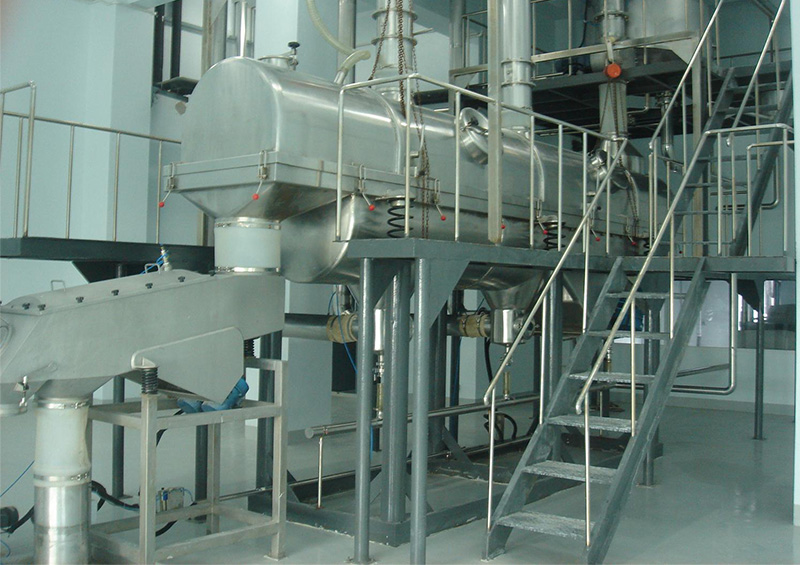






What type of dryer is suitable for drying milk powder
 Jan 03, 2025|
 View:3107
Drying milk powder is a crucial step in the production of powdered milk, enabling preservation, ease of transportation, and extended shelf life. Choosing the right type of spray dryer machine for milk powder is essential for effectively removing moisture while maintaining the quality of the milk powder. Below, we explore various types of dryers suitable for drying milk powder, their mechanisms, advantages, and considerations.
1. Spray Dryers
Mechanism:
Spray drying is one of the most common methods used for drying milk powder. In this process, liquid milk is atomized into fine droplets using a nozzle or a rotary atomizer. These droplets are then introduced into a hot air chamber where the moisture evaporates rapidly, leaving behind dry powder.
Advantages:
Rapid Drying: The high surface area of the droplets allows for quick evaporation, making this method efficient.
Quality Retention: Spray drying can produce a high-quality powder with minimal heat exposure, preserving nutrients and flavor.
Scale Flexibility: spray dryer machine for milk powder can be easily scaled up or down, making them suitable for both small and large production facilities.
Considerations:
Initial Cost: spray dryer machine for milk powder can be expensive to install and operate due to the need for specialized equipment.
Energy Consumption: They can consume significant amounts of energy, especially in large-scale operations.
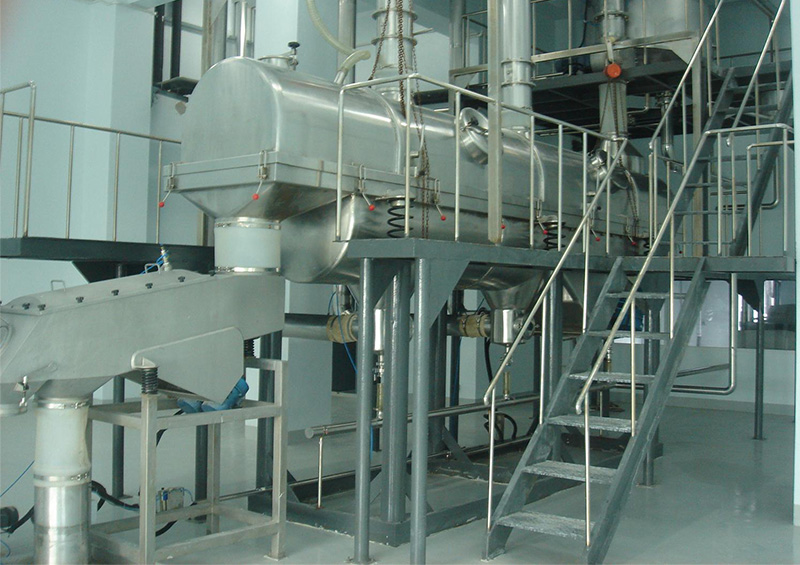
2. Fluidized Bed Dryers
Mechanism:
In a fluidized bed dryer, milk powder is placed in a bed of hot air. The air flows upward through the powder, causing it to behave like a fluid. This allows for uniform drying as the particles are suspended and exposed to hot air.
Advantages:
Uniform Drying: The fluidized bed ensures even drying of the powder, reducing the risk of clumping or uneven moisture content.
Gentle Processing: The low-temperature drying process helps to preserve the quality of the milk powder.
Scalability: Fluidized bed dryers can be scaled up for larger operations.
Considerations:
Particle Size Sensitivity: The effectiveness can be influenced by the size and density of the milk powder particles.
Complexity: The design and control systems can be more complex than other drying methods.
3. Drum Dryers
Mechanism:
Drum drying involves spreading a thin layer of liquid milk onto the surface of heated drums. As the drums rotate, the milk is dried by direct contact with the hot surface, and then scraped off as a thin film of dried powder.
Advantages:
Low Energy Use: Drum dryers can be more energy-efficient for certain applications, especially for viscous products.
Simple Operation: The operation is relatively straightforward, making it easier to manage.
Considerations:
Heat Sensitivity: The high temperatures can lead to changes in flavor and nutrient loss, which may not be ideal for all milk products.
Limited Capacity: Drum dryers may not be suitable for large volumes of milk powder production.
4. Vacuum Dryers
Mechanism:
Vacuum drying operates under reduced pressure, which lowers the boiling point of water. Milk powder is placed in a vacuum chamber where heat is applied, allowing moisture to evaporate at lower temperatures.
Advantages:
Preservation of Quality: The lower temperatures help to preserve sensitive nutrients and flavors, making it ideal for high-quality milk powder.
Reduced Oxidation: The vacuum environment minimizes oxidation, enhancing shelf life.
Considerations:
Longer Drying Times: Vacuum drying may take longer compared to other methods.
Higher Costs: The spray dryer machine for milk powder and operational costs can be higher due to the complex setup.
5. Convection Dryers
Mechanism:
Convection dryers use hot air circulated over the milk powder to remove moisture. The air absorbs moisture from the powder and is then vented out.
Advantages:
Simplicity: Convection dryers are relatively easy to operate and maintain.
Versatility: They can be used for a wide range of products beyond milk powder.
Considerations:
Heat Profile: The effectiveness can be heavily influenced by the air temperature and flow rate.
Drying Uniformity: Achieving uniform drying may be challenging without careful control of airflow.
6. Microwave Dryers
Mechanism:
Microwave drying uses electromagnetic radiation to heat the moisture within the milk powder. The energy is absorbed by the water molecules, leading to rapid evaporation.
Advantages:
Fast Processing: Microwave drying can significantly reduce drying times compared to conventional methods.
Quality Maintenance: It can help preserve the nutritional content and flavor of the milk powder.
Considerations:
Equipment Cost: The initial investment can be high due to specialized equipment.
Uneven Heating: Care must be taken to ensure even distribution of microwaves to avoid hot spots that can burn the product.
7. Solar Dryers
Mechanism:
Solar dryers utilize solar energy to dry milk powder. They can be simple open-air drying setups or more complex solar tunnel dryers that concentrate sunlight.
Advantages:
Energy Efficiency: Solar drying is environmentally friendly and can reduce energy costs.
Low Operating Costs: Once established, the operating costs are minimal.
Considerations:
Weather Dependence: The effectiveness of solar dryers is highly dependent on weather conditions.
Longer Drying Times: Solar drying generally takes longer than other methods.
Selecting the right spray dryer machine for milk powder production depends on various factors, including the desired quality of the final product, production scale, budget, and energy considerations.
Each drying method has its own advantages and drawbacks, and often, the choice will hinge on balancing cost, efficiency, and product quality. For industrial-scale operations, spray dryer machine for milk powder are often favored for their efficiency and product quality, while smaller producers may find fluidized bed or microwave dryers more suitable.
Ultimately, the technology chosen should align with the specific goals of the production process, ensuring the best possible outcomes for the milk powder being produced.