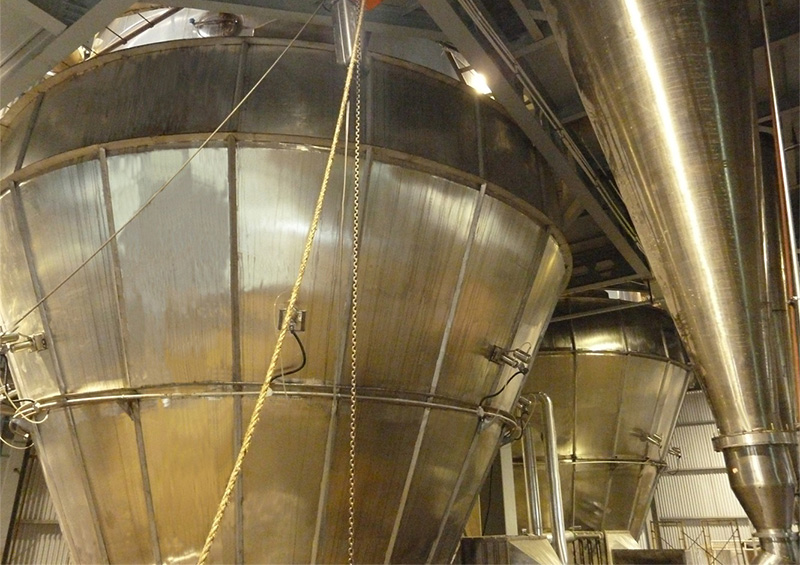






Instant Coffee Process Technologies: Innovations and the Role of Coffee Spray Drying
 Mar 05, 2025|
 View:2610
Instant coffee has become a staple in households and cafes around the world, offering convenience without compromising on flavor. The production of instant coffee involves several technologies, with spray drying being one of the most prominent methods. This article delves into the instant coffee manufacturing process, focusing on the innovations in coffee spray drying technology and its impact on quality and efficiency.
Introduction to Instant Coffee
Instant coffee, or soluble coffee, is produced by brewing coffee beans and then transforming the liquid into a dry form that can be reconstituted with hot water. The appeal of instant coffee lies in its ease of preparation and long shelf life. Global consumption has surged, driven by the demand for convenience and quick solutions in our fast-paced lives.
The Instant Coffee Production Process
The production of instant coffee typically involves the following steps:
Green Coffee Selection: High-quality green coffee beans are selected based on flavor profiles, quality, and origin.
Roasting: The selected beans are roasted to develop their flavors. The roasting process is critical, as it significantly influences the final taste of the instant coffee.
Grinding: After roasting, the coffee beans are ground to a specific particle size to enhance extraction during brewing.
Brewing: The ground coffee is brewed using hot water, extracting soluble compounds, flavors, and aromas. This process can vary in time and temperature, affecting the final product's quality.
Concentration: The brewed coffee is concentrated through methods such as evaporation, which removes excess water, leading to a thicker coffee solution.
Drying: The concentrated coffee solution undergoes drying to eliminate moisture, resulting in instant coffee granules or powder. This is where spray drying technology plays a crucial role.
Packaging: The final product is packaged in moisture-proof containers to preserve freshness and flavor.
The Role of Spray Drying in Instant Coffee Production
What is Spray Drying?
Spray drying is a method of producing a dry powder from a liquid by rapidly drying with a hot gas. It is widely used in the food industry, particularly for instant coffee, due to its efficiency and ability to preserve flavor and aroma.
Advantages of Spray Drying
Speed: Spray drying is a fast process, allowing large quantities of instant coffee to be produced in a short time. This is crucial for meeting global demand.
Quality: The technology ensures that the flavor and aroma compounds are preserved during the drying process. This is achieved by minimizing the time the coffee is exposed to high temperatures.
Uniformity: Spray drying produces uniform particle sizes, which contribute to consistent quality and solubility.
Cost-Effectiveness: The efficiency of spray drying can lead to lower production costs, making instant coffee more accessible to consumers.

Innovations in Spray Drying Technology
Recent advancements in spray drying technology have revolutionized the instant coffee production process. Some notable innovations include:
Better Atomization Techniques: Modern spray dryers utilize advanced atomization techniques, which create finer droplets of liquid coffee. This enhances the drying efficiency and improves the quality of the final product.
Temperature Control: Innovations in temperature control during drying help maintain the integrity of volatile compounds. By optimizing the drying environment, manufacturers can produce a higher quality instant coffee.
Use of Additives: Some manufacturers are exploring the use of food-grade additives that can enhance solubility and flavor retention. These additives can improve the mouthfeel and overall sensory experience of the instant coffee.
Continuous Drying Systems: Continuous spray drying systems allow for uninterrupted production and better scalability. This innovation improves efficiency and reduces downtime between batches.
Integrated Quality Control Systems: Modern spray drying installations come equipped with integrated quality control systems that monitor parameters like humidity, temperature, and particle size in real-time. This ensures that the final product meets stringent quality standards.
Environmental Considerations
As the demand for instant coffee continues to grow, so do the concerns about environmental sustainability. Innovations in spray drying technology are also addressing these concerns:
Energy Efficiency: New spray drying systems are designed to consume less energy, thereby reducing the carbon footprint of instant coffee production.
Waste Reduction: Advances in technology have led to better recovery systems that minimize waste. For instance, excess moisture can be captured and reused in other processes, contributing to a more sustainable production cycle.
Water Use Reduction: By improving the efficiency of water usage during the brewing and drying processes, manufacturers can significantly reduce their overall water consumption.
Future Trends in Instant Coffee Production
The future of instant coffee production is poised for further innovations, driven by consumer preferences and technological advancements. Key trends include:
Health-Conscious Products: With an increasing number of consumers seeking healthier options, manufacturers may focus on producing instant coffees with added health benefits, such as functional ingredients or reduced caffeine content.
Sustainable Sourcing: The emphasis on sustainability will push companies to source coffee beans from environmentally responsible farms, ensuring fair trade practices and organic cultivation.
Personalization: Emerging technologies may allow for more personalized instant coffee experiences, enabling consumers to customize flavors, strengths, and even health benefits.
Smart Packaging: The integration of smart packaging solutions can enhance the consumer experience by providing information about the product's freshness and brewing instructions.
Instant coffee has evolved significantly over the years, with advancements in processing technologies, particularly spray drying, playing a pivotal role in its production. The innovations in this area not only enhance the quality and efficiency of instant coffee but also address environmental concerns. As consumer preferences continue to evolve, the instant coffee industry must adapt to meet the demands for sustainability and personalization. The future looks promising for instant coffee, driven by technology and a commitment to quality.