






Spray Dried vs. Freeze Dried Coffee: How To Choose?
 Oct 23, 2025|
 View:2302
In our fast-paced world, instant coffee has become an essential solution for those seeking both convenience and a quick caffeine boost. However, not all instant coffees are created equal. The fundamental distinction lies in the production method: spray-drying versus freeze-drying. This comprehensive guide will explore these two processes, their impact on your cup of coffee, and how to determine which method best suits your preferences and lifestyle.
Understanding the Basic Production Processes
The journey from coffee beans to instant powder differs significantly between these two methods, and this difference lays the foundation for their distinct characteristics.
Spray-drying is the traditional method that has been used for decades in instant coffee production. This process begins with brewing coffee in large quantities. The liquid coffee is then sprayed into a chamber of hot air (typically around 250°C), where the water content rapidly evaporates. This leaves behind fine, dry coffee particles that are collected as powder. The entire process is quick and efficient, designed for mass production .
Freeze-drying, a more modern approach, employs a completely different technique. First, the brewed coffee is rapidly frozen at extremely low temperatures (approximately -50°C). The frozen coffee slabs are then placed in a vacuum chamber where sublimation occurs—the ice transforms directly into water vapor without passing through the liquid phase. This sophisticated process preserves the coffee's structural integrity and results in the characteristic chunky granules associated with premium instant coffee .
Flavor and Aroma: The Critical Difference
When it comes to coffee, flavor and aroma are paramount, and here the two methods show their most significant distinctions.
Freeze-dried coffee generally preserves the natural oils and volatile compounds responsible for coffee's complex flavors and aromas much more effectively. The low-temperature vacuum process prevents the degradation of delicate flavor notes, resulting in a cup that closely resembles freshly brewed coffee. You can expect more nuanced flavors, with possible hints of fruit, chocolate, or nuts, depending on the bean origin. The aroma is fuller and more authentic, contributing significantly to the overall coffee experience .
Spray-dried coffee, unfortunately, loses much of this complexity during production. The high-temperature environment causes many delicate aromatic compounds to evaporate along with the water. What remains is often a simpler flavor profile that tends toward generic "coffee" taste, sometimes with woody or roasty notes, and occasionally a slight bitterness that lacks the nuance of freeze-dried alternatives. This is why many spray-dried coffees are often blended with sugar and creamers to create more palatable "3-in-1" products .
Table: Quick Comparison of Spray-Dried vs. Freeze-Dried Coffee
Characteristic | Spray-Dried Coffee | Freeze-Dried Coffee |
|---|---|---|
Production Process | High-temperature (≈250°C) spray drying | Low-temperature freeze drying and sublimation |
Flavor Quality | Simpler, may have woody notes | Complex, closer to fresh coffee |
Aroma | Less aromatic, some loss of nuances | Better preservation of natural aromas |
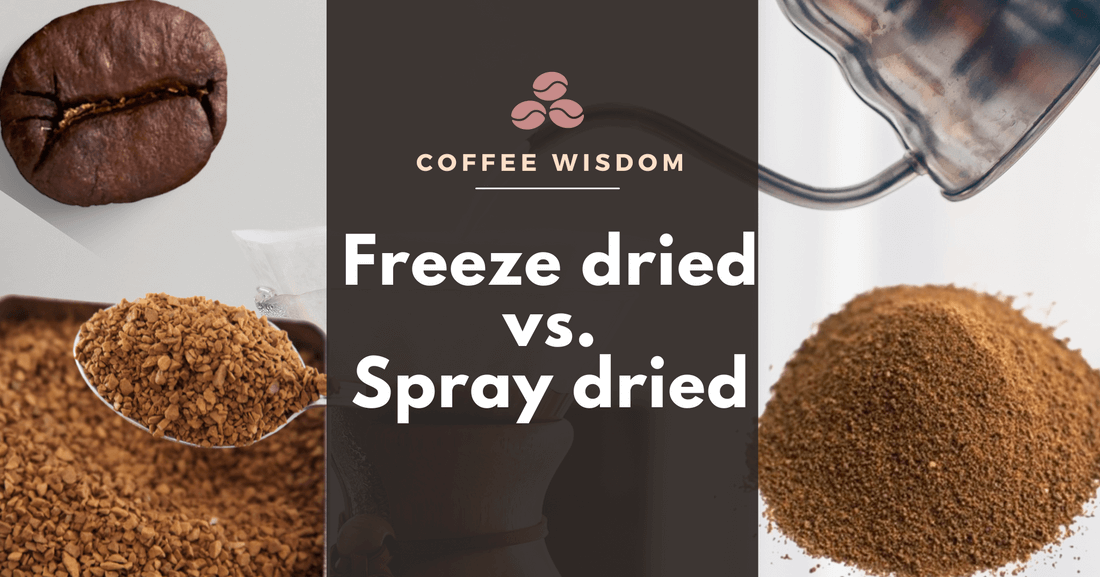
Texture/Form | Fine, powdery particles | Chunky, irregular granules |
Solubility | Dissolves quickly | May take slightly longer to dissolve |
Price Point | Budget-friendly | More expensive |
Physical Characteristics: Appearance and Solubility
The physical differences between these coffee types are immediately noticeable and affect your brewing experience.
Spray-dried coffee produces a fine, powdery substance with uniform, small particles. This consistency allows it to dissolve almost instantly in hot water, making it incredibly convenient for a quick preparation. However, this fineness can sometimes lead to clumping, especially when exposed to moisture .
Freeze-dried coffee, in contrast, features larger, chunkier granules with a more irregular, crystalline structure. These granules dissolve smoothly but might take slightly longer than their spray-dried counterpart. The porous structure of freeze-dried granules actually enhances their solubility in both hot and cold water, making them versatile for various preparations, including iced coffee .
Economic Considerations: Cost and Value
The production method significantly influences the price point of the final product.
Spray-drying is a faster, more efficient process that requires less specialized equipment and energy input. This economic advantage translates to a more affordable product for consumers. If you're on a tight budget or consume large quantities of instant coffee, spray-dried options offer undeniable value .
Freeze-drying is a more technologically advanced process that takes considerably longer (sometimes days rather than hours) and requires sophisticated vacuum chambers. The extended production time and specialized equipment contribute to the higher price tag of freeze-dried coffee. However, for many coffee enthusiasts, the superior flavor experience justifies the additional cost .
Choosing What's Right For You
Your ideal instant coffee type depends largely on your priorities, preferences, and consumption patterns.
Choose freeze-dried coffee if:
Flavor quality is your primary concern
You appreciate nuanced tasting notes and aroma
You typically drink your coffee black
You're willing to pay a premium for a better experience
You need coffee that dissolves well in both hot and cold water
Freeze-dried coffee is particularly worthwhile for those who enjoy savoring their coffee and appreciate the subtle differences between bean origins and roasts. The complexity preserved through the freeze-drying process makes it possible to actually distinguish flavor notes that would be lost in spray-dried alternatives .
Choose spray-dried coffee if:
Budget is your main consideration
You primarily use instant coffee for caffeine needs rather than flavor experience
You usually add milk, sugar, or flavorings to your coffee
You need the quickest-dissolving option available
Spray-dried coffee makes sense for those who view coffee primarily as a functional beverage or for situations where convenience and cost outweigh flavor considerations. If you're going to mask the coffee flavor with cream and sugar anyway, the subtle advantages of freeze-dried coffee may not be worth the extra expense .
Beyond the Basics: Additional Considerations
While the spray-dried versus freeze-dried distinction is crucial, other factors also deserve attention when selecting instant coffee.
Bean Quality: The production method isn't the only variable affecting your cup. Freeze-dried coffees often use higher-quality Arabica beans, while spray-dried products frequently rely on Robusta beans, which are more bitter but cheaper to produce. Some specialty spray-dried coffees do use Arabica beans, bridging the quality gap to some extent .
Health Considerations: Many spray-dried coffees are marketed as "3-in-1" mixes containing significant amounts of sugar, creamers, and artificial flavors. If you're health-conscious, opting for pure coffee—whether spray-dried or freeze-dried—and controlling your additions is generally wiser .
The debate between spray-dried and freeze-dried coffee ultimately boils down to a trade-off between cost and quality.
Spray-dried coffee wins on affordability and quick dissolution, making it a practical choice for budget-conscious consumers or those who primarily use instant coffee as a convenient caffeine delivery system. The fine powder dissolves rapidly, and when you're adding milk and sugar anyway, the flavor nuances lost in processing matter less .
Freeze-dried coffee, while more expensive, offers a significantly superior flavor experience that much more closely resembles freshly brewed coffee. The careful low-temperature processing preserves the coffee's complex aromas and nuanced flavors, making it the clear choice for those who appreciate quality and typically drink their coffee black .
Fortunately, the growing popularity of freeze-dried options means consumers today have better choices than ever before in the instant coffee aisle. By understanding these fundamental processing differences, you can make an informed decision that aligns with your palate preferences, usage patterns, and budget—ensuring that even your quickest coffee break delivers exactly what you're looking for .