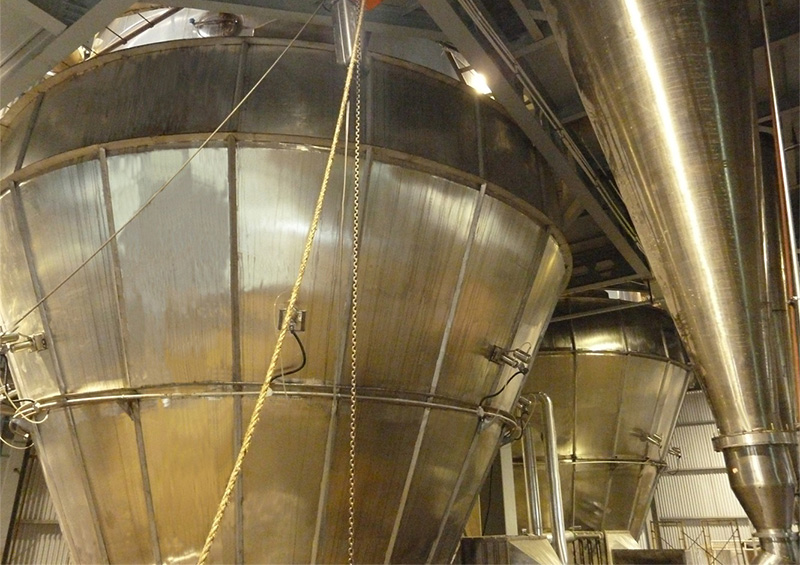






Guide to Coffee Spray Drying: From Liquid Extract to Instant Powder
 Oct 17, 2025|
 View:4729
Introduction to Coffee Spray Drying
The spray drying process has revolutionized how we produce instant coffee, enabling the transformation of liquid coffee extract into a stable, soluble powder that can be reconstituted in seconds. This technology plays a critical role in the coffee production line by efficiently converting concentrated coffee solution into a convenient powdered form that is shelf-stable and easy to transport and store. The fundamental principle involves atomizing coffee extract into tiny droplets that are rapidly dried when exposed to hot air, preserving the essential qualities of coffee while creating a product with extended shelf life and consistent flavor profile.
The significance of spray drying in coffee production cannot be overstated. Compared to other drying methods, spray drying offers unmatched efficiency for industrial-scale production while maintaining the desirable characteristics of coffee. The process has been optimized over decades to balance quality and productivity, making instant coffee accessible to millions worldwide who seek a quick caffeine fix without elaborate brewing equipment.
The Spray Drying Process Step by Step
1. Atomization: Creating the Coffee Mist
The spray drying process begins with atomization, where concentrated coffee liquid (typically with 35-50% solid content) is pumped into the spray dryer and broken down into extremely fine droplets. This is achieved using either high-pressure nozzles or centrifugal atomizers that can rotate at speeds up to 25,000 RPM. The atomization process is crucial as it dramatically increases the surface area of the coffee extract, enabling rapid moisture evaporation in subsequent stages. The size of the droplets directly influences the final particle size and drying characteristics, with typical atomizers creating droplets between 50-340 micrometers in diameter depending on the machine model.
2. Hot Air Introduction and Drying
Simultaneously, hot air is introduced into the drying chamber at controlled temperatures typically ranging from 160°C to 260°C. This hot air serves as the drying medium that facilitates the evaporation of moisture from the coffee droplets. The atomized coffee droplets and hot air come into contact within the drying chamber in a co-current flow pattern. The hot air rapidly absorbs moisture from the coffee droplets, causing them to dry and transform into fine coffee particles in a remarkably short time - typically between 5-30 seconds. This rapid drying is particularly advantageous for heat-sensitive materials like coffee, as it helps preserve flavor compounds that might be lost with slower drying methods.
3. Separation and Collection
As the dried coffee particles form, they are carried by the air currents toward the separation system. Inside the dryer, separation devices such as cyclones or bag filters separate the dried coffee particles from the exhaust air with high efficiency (typically ≥95%). The separated dried coffee particles are then collected at the bottom of the dryer or in a dedicated collection chamber. The final moisture content of the spray-dried coffee powder is reduced to between 3-5%, making it shelf-stable and resistant to microbial growth. Depending on the dryer design, there may be additional processing steps such as cooling or sieving to ensure the final product meets quality standards before packaging.
Technical Specifications and Equipment Variations
Coffee spray dryers come in various sizes and configurations to meet different production needs. The technical specifications vary significantly based on capacity requirements:
Table: Technical Specifications of Different Spray Dryer Models
Model | Evaporation Capacity (kg/h) | Power Consumption (kW) | Tower Diameter (mm) | Finished Product Output (kg/h) |
|---|---|---|---|---|
ZPG-25 | 25 | 63 | 1,200 | 4.8-7.2 |
ZPG-100 | 100 | 153 | 2,400 | 18.4-28 |
ZPG-200 | 200 | 246 | 2,800 | 36.8-56.4 |
ZPG-300 | 300 | 330 | 3,200 | 55-85 |
These systems can be configured with different heating sources including electricity, steam, oil, or natural gas, offering flexibility to adapt to various energy availability and cost considerations. The equipment is predominantly constructed from high-grade stainless steel (SUS304, SUS304L, SUS316, SUS316L) known for excellent corrosion resistance, hygienic properties, and durability, making them suitable for food processing applications.
Modern coffee spray dryers incorporate advanced control systems featuring PLC touch screens for precise temperature and airflow control, ensuring optimal drying conditions. Many systems also include innovative features such as tower wall purging devices to improve material recycling rates, self-priming peristaltic pumps to avoid secondary pollution, and heat recovery systems to enhance energy efficiency.

Advantages of Spray Drying for Coffee Production
The widespread adoption of spray drying in the coffee industry can be attributed to several significant advantages:
High Efficiency: Spray drying offers remarkable drying speed, with 95-98% of moisture content evaporating almost instantly upon atomization. This rapid processing helps maintain production throughput while preserving the quality of heat-sensitive compounds in coffee.
Product Quality: The process produces coffee powder with excellent solubility, uniform particle size distribution, and good flow characteristics. The final product typically has a bulk density of 180-220 grams per liter, making it easy to measure and package. The spherical, bead-like particles created through spray drying demonstrate superior free-flowability and dissolve quickly in hot water.
Economic Benefits: Spray drying is considerably more cost-effective than alternative methods like freeze drying, especially for large-scale production. The relatively simple tower design allows for continuous operation with minimal product loss, contributing to lower production costs. The equipment can handle large volumes of liquid extract, with production capacity reaching up to 500 kg per hour in industrial-scale plants.
Shelf Stability: The low moisture content (3-5%) achieved through spray drying significantly extends shelf life without requiring refrigeration or special storage conditions. This makes the product ideal for distribution and storage under various environmental conditions.
Challenges and Limitations
Despite its many advantages, spray drying does present certain challenges that manufacturers must address:
The primary concern with spray drying is the potential loss of volatile aroma compounds due to the high temperatures involved. The heat exposure during drying can degrade some delicate flavor components, potentially resulting in a product that lacks the complexity of freshly brewed coffee. To mitigate this, manufacturers often employ aroma recovery systems that capture volatile compounds during earlier extraction stages and reintroduce them to the dried powder. Some also add coffee oils after drying to enhance flavor.
Another limitation is the inherent fine particle size of spray-dried coffee, which can lead to dusting and clumping. To address this, many manufacturers employ an agglomeration process where the dried particles are rewetted with steam or water, causing them to bond into larger clusters. This secondary process creates granules that dissolve more easily and have better visual appeal.

Quality Control and Optimization
Successful spray drying of coffee requires careful control of multiple parameters to ensure consistent product quality:
Temperature Management: Inlet air temperature typically ranges between 160-260°C, while outlet temperature is maintained at 80-100°C. Precise temperature control is essential to prevent thermal degradation while ensuring efficient drying.
Atomization Control: The rotation speed of centrifugal atomizers (ranging from 8,000-25,000 RPM) and the pressure of nozzle systems must be optimized to achieve the desired droplet size and distribution.
Feed Concentration: The coffee extract is concentrated to 35-50% solid content before drying to improve efficiency. Higher concentrations reduce energy consumption but may affect viscosity and atomization characteristics .
Advanced spray dryers incorporate automated control systems that monitor and adjust these parameters in real-time, ensuring consistent product quality despite variations in raw material properties or ambient conditions .
Comparison with Freeze Drying
Spray drying is often compared with freeze drying, another common method for producing instant coffee:
Table: Spray Drying vs. Freeze Drying for Coffee Production
Criteria | Spray Drying | Freeze Drying |
|---|---|---|
Process Overview | Coffee extract sprayed into hot air | Extract frozen, then ice sublimated under vacuum |
Cost | Lower cost, efficient for large volumes | Higher cost, slower process |
Flavor Retention | Some loss of volatile compounds due to heat | Better flavor retention due to low temperatures |
Particle Characteristics | Fine powder with smooth dissolution | Porous granules, dissolves easily |
Production Volume | Suitable for mass production | Less efficient for large scale |
Typical Use | Budget-friendly instant coffee | Premium instant coffee products |
While freeze drying generally preserves more of the coffee's delicate aroma compounds, spray drying remains the dominant method for large-scale instant coffee production due to its economic advantages and higher throughput capacity.
The spray drying method has fundamentally transformed instant coffee production, enabling the creation of a convenient, shelf-stable product that maintains the essential characteristics of coffee. While the process involves complex engineering and precise control, it effectively balances product quality with manufacturing efficiency. Ongoing technological advancements continue to address the limitations of spray drying, particularly in the area of aroma preservation, making it likely that this method will remain central to instant coffee production for the foreseeable future.