





What is spray dried instant coffee?
 Sep 22, 2025|
 View:4807
Spray dried instant coffee is a ubiquitous product in pantries worldwide, celebrated for its convenience and affordability. This instant coffee spray drying process transforms brewed coffee into a soluble powder, allowing for quick preparation with just hot water. Understanding its production, characteristics, and how it compares to other types of coffee reveals why it remains a popular choice for millions.
What is Spray Dried Instant Coffee?
Spray dried instant coffee is a type of soluble coffee produced by spraying concentrated coffee liquid into a stream of hot air, which rapidly evaporates the moisture content, leaving behind fine, dry coffee particles. This method, pioneered on a large scale by companies like Nestlé in 1938, is designed for efficiency and mass production, making it one of the most common and economical ways to produce instant coffee.
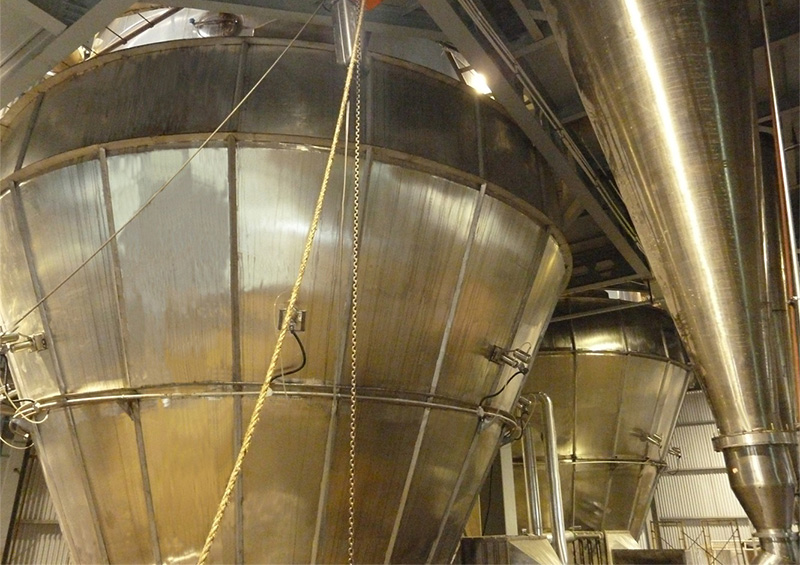
The process begins with standard coffee beans. After harvesting, the beans are roasted, ground, and brewed into a highly concentrated liquid coffee extract. This concentrate is then pumped to the top of a tall spray-drying tower and atomized into a fine mist through a high-pressure nozzle. As these tiny droplets fall through a chamber filled with hot air (typically heated to temperatures between 160°C and 250°C), the water content instantaneously evaporates. The resulting dried coffee solids are collected from the bottom of the chamber as a fine powder.
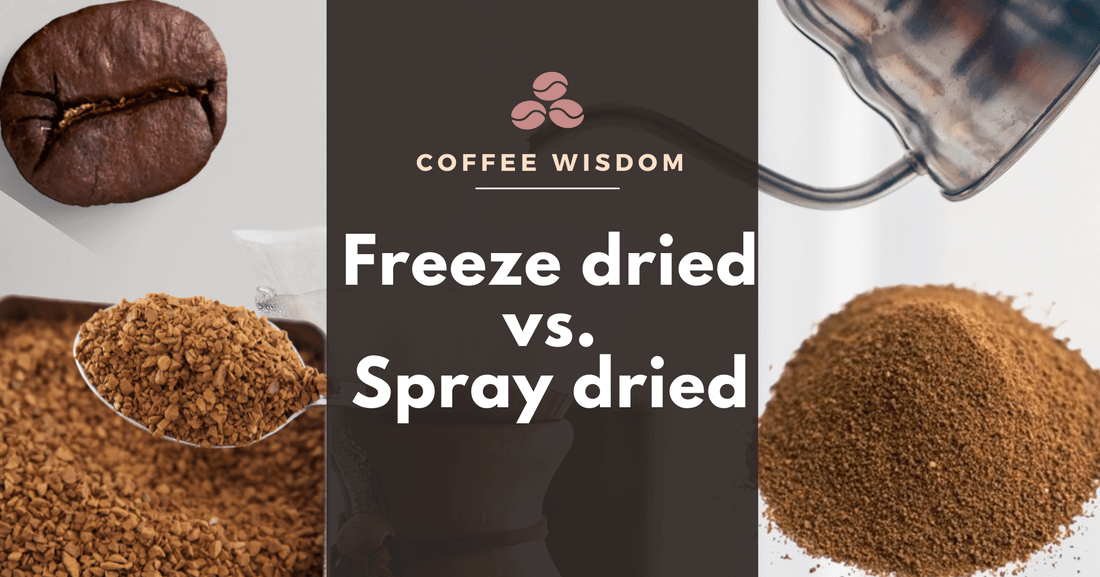
A key characteristic of spray dried instant coffee is its physical appearance. The powder is typically very fine, with small, uniform particles that have a powdery texture. This is in stark contrast to freeze-dried instant coffee, which is characterized by lighter, larger, and more irregularly shaped granules.
The Production Process: A Step-by-Step Look
The journey of spray dried instant coffee is a marvel of industrial food processing, involving several precise stages to ensure consistency and shelf stability.
Raw Material Selection and Pretreatment: The process starts with the careful selection of green coffee beans. Inferior beans and impurities are removed using vibrating screens and air pressure systems. The quality of the raw beans significantly impacts the final product.
Roasting: The selected green beans are roasted at high temperatures (between 180°C to 240°C). This is a critical step where the beans develop their complex flavor, aroma, and color through Maillard reactions. The roasting time and temperature are carefully controlled to achieve the desired profile, as under-roasting or over-roasting can negatively affect flavor and extraction efficiency.
Grinding and Extraction: The roasted beans are then ground to a specific particle size to maximize surface area. These grounds are brewed on an industrial scale using large percolators or extractors, where hot water passes through them to dissolve the soluble compounds, oils, and flavors, creating a potent coffee extract.
Concentration: The extracted coffee liquid is then concentrated, often using vacuum evaporation. This step lowers the boiling point of water, allowing for concentration at around 60°C to prevent burning the coffee and to preserve flavor. The goal is to increase the solid content to over 35%, which drastically improves the efficiency of the subsequent drying stage.
Spray Drying: This is the core of the process. The concentrated coffee liquid is atomized into millions of microscopic droplets and exposed to hot air in a drying tower. The extreme heat causes the water to flash-evaporate, leaving behind fine particles of pure coffee solid. These particles are collected using cyclones or filters.
Packaging: The final powder is highly hygroscopic (absorbs moisture), so it must be packaged immediately in airtight, often nitrogen-flushed containers—such as glass jars, metal tins, or foil sachets—to protect it from moisture and oxygen, which would cause it to clump and degrade.
Advantages and Disadvantages of Spray Dried Coffee
Like any product, spray dried instant coffee has its strengths and weaknesses, largely defined by its manufacturing process.
Advantages:
Cost-Effectiveness: The spray-drying process is fast and highly efficient, allowing for massive production volumes at a low cost per unit. This makes it the most affordable instant coffee option on the market.
Rapid Dissolution: The fine particle size of the powder allows it to dissolve almost instantly in hot water, living up to the "instant" namesake and providing a quick caffeine fix.
Long Shelf Life: The low moisture content and effective packaging give spray-dried coffee an exceptionally long shelf life, making it ideal for storage, distribution, and emergency pantries.
Convenience and Portability: It requires no brewing equipment, is lightweight, and is easy to transport, making it perfect for travel, offices, and outdoor activities.
Disadvantages:
Compromised Flavor and Aroma: The primary drawback is the loss of delicate flavors. The high heat used during spray drying evaporates many of the volatile oils and aromatic compounds that give coffee its rich, complex character. This often results in a cup that can taste flat, bland, or overly generic compared to brewed or freeze-dried alternatives.
Often Uses Lower-Grade Beans: To maintain low prices, many mass-market spray-dried products are made from lower-grade Robusta beans or blends, which are inherently more bitter and less aromatic than higher-quality Arabica beans. This further contributes to a perception of lower quality.
Types and Varieties of Spray Dried Instant Coffee
Not all spray dried instant coffee is the same. Manufacturers offer different varieties to cater to diverse tastes and budgets.
Spray-Dried Arabica Coffee Powder: Made from 100% Arabica beans, this type aims to offer a smoother, sweeter cup with notes of chocolate, caramel, or fruit. It is positioned as a premium option within the spray-dried category and is consequently more expensive (e.g., Nescafé Gold).
Spray-Dried Robusta Coffee Powder: Made from 100% Robusta beans, this type is known for being strong, bold, and bitter, with a higher caffeine content. It is very affordable and provides a powerful kick (e.g., Nescafé Classic).
Arabica-Robusta Blends: This popular category attempts to strike a balance between cost and flavor, combining the smoothness of Arabica with the strength and caffeine of Robusta (e.g., Nescafé Taster’s Choice).
Decaffeinated Spray-Dried Coffee: The caffeine is removed from the beans before processing, resulting in a coffee with a milder flavor and less bitterness for those who are sensitive to caffeine (e.g., Nescafé Decaf, Sanka).
Organic Spray-Dried Coffee: This coffee uses beans grown without synthetic pesticides or fertilizers and is certified by regulatory bodies. It appeals to eco-conscious consumers and often features a cleaner, more natural flavor profile (e.g., Mount Hagen Organic).
Spray-Dried vs. Freeze-Dried: The Key Differences
The other primary method for making instant coffee is freeze-drying (or lyophilization). The differences are significant.
Feature | Spray Dried Instant Coffee | Freeze-Dried Instant Coffee |
|---|---|---|
Process | Coffee extract sprayed into hot air (~250°C) | Coffee extract frozen & dried in a vacuum (sublimation) |
Particle Form | Fine, dense powder | Light, coarse, chunky granules |
Flavor Retention | Poor - high heat destroys volatile oils | Excellent - low temperature preserves aroma |
Cost | Low - fast and efficient process | High - slower, more energy-intensive process |
Dissolution | Very fast | Slightly slower due to chunkier granules |
Typical Bean Quality | Often lower-grade (Robusta) | Often higher-grade (Arabica) |
Freeze-drying is considered superior for flavor preservation, but spray-drying wins on cost and production speed.
Spray dried instant coffee is a testament to the pursuit of convenience and accessibility. While it may not satisfy the palate of a specialty coffee connoisseur, its role in providing a quick, affordable, and consistent caffeine source to a global audience is undeniable. For those seeking a reliable daily brew where speed and budget are the top priorities, spray dried instant coffee remains an immensely practical and logical choice. For moments when flavor takes precedence, exploring freeze-dried or other brewing methods is recommended.