





What is a spray dryer used for?
 Jun 18, 2025|
 View:3551
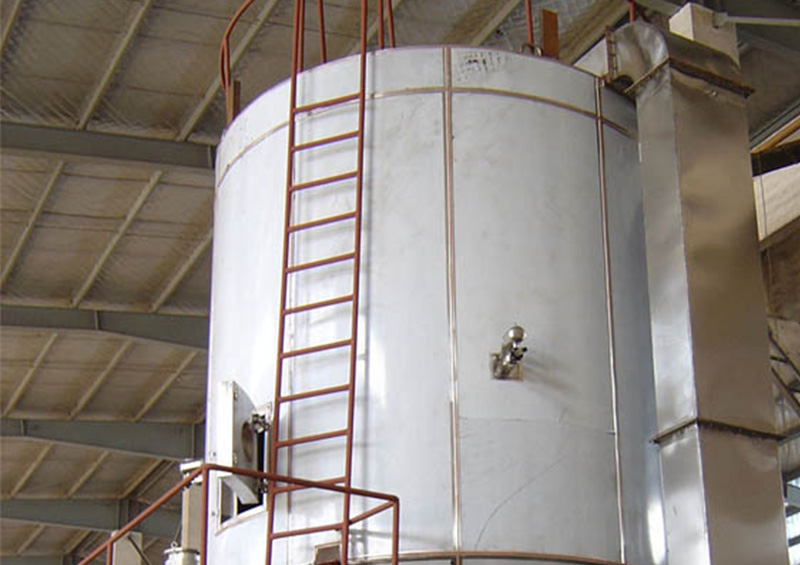
Spray drying stands as one of the most ubiquitous and versatile unit operations in modern industrial processing. Its fundamental purpose – to transform a liquid feed (solution, suspension, slurry, emulsion, or paste) into a dry powder in a single, continuous operation – addresses critical needs across numerous sectors. Beyond this basic definition lies a complex interplay of physics, engineering, and chemistry that enables its widespread adoption. This detailed examination delves into the mechanisms, benefits, applications, and nuances of spray drying technology.
I. The Fundamental Principle and Process
At its core, spray drying harnesses the enormous surface area created by atomizing a liquid and the rapid heat and mass transfer that occurs when this finely dispersed spray meets a hot drying medium (typically air, sometimes nitrogen for oxygen-sensitive materials). This process occurs within a specialized chamber and involves three critical stages:
Atomization:
Purpose: To break down the bulk liquid feed into a vast number of fine droplets, maximizing the surface area exposed to the drying gas. This is the single most crucial stage, dictating the final powder properties like particle size, density, and morphology.
Methods:
Rotary Atomizers (Wheel/Disk): Feed is centrifugally accelerated to high speed on a rapidly rotating disk (10,000 – 50,000 RPM) and flung off the edge as fine droplets. Capable of handling high capacities, viscous feeds, and slurries with small insoluble particles. Produces a hollow sphere particle morphology.
Pressure Nozzles: High-pressure feed (7 – 700 bar) is forced through a small orifice. Creates coarser droplets compared to rotary, often resulting in denser particles. Can be single-fluid (pressure only) or two-fluid (pressure + auxiliary atomizing gas like compressed air or steam).
Two-Fluid (Pneumatic) Nozzles: Utilizes high-velocity air or steam impinging on a lower pressure liquid stream to shear it into fine droplets. Excellent for low capacities, sticky feeds, smaller particle sizes, and less abrasive feeds. Offers flexibility in droplet size control via gas/liquid flow rates.
Spray-Air Contact & Drying:
Purpose: Intimate mixing of the atomized droplets and hot drying gas (inlet temperatures typically 120°C – 300°C+, though can be lower for heat-sensitive materials) in the drying chamber. Rapid evaporation of moisture (mostly water, but solvents too) occurs in distinct phases:
Constant Rate Period: Surface moisture evaporates rapidly. Droplet temperature stabilizes near the wet-bulb temperature of the drying gas. The droplet shrinks minimally initially.
Falling Rate Period: As surface dries, a semi-permeable barrier or crust forms. Evaporation slows and becomes controlled by diffusion of internal moisture to the surface. Particle temperature rises towards the outlet gas temperature. Particle morphology (hollow, dense, wrinkled) is largely determined here.
Chamber Configurations:
Co-current: Droplets and hot gas enter the top of the chamber and flow downwards together. Ideal for heat-sensitive products as particles spend minimal time at the highest gas temperature (contact happens when gas is hottest, but particle dries quickly and cools down alongside depleting gas temp). Most common configuration.
Counter-current: Droplets enter near the top, hot gas enters near the bottom. Gas and particles move in opposite directions. Provides longer residence times and higher thermal efficiency, leading to lower residual moisture but increased risk of thermal degradation for sensitive products. Limited use today.
Mixed Flow: Complex flow patterns combining elements of co- and counter-current, often achieved by introducing gas tangentially. Used for specific particle morphology needs.
Separation & Collection:
Purpose: To efficiently separate the dried particles from the exhaust gas stream.
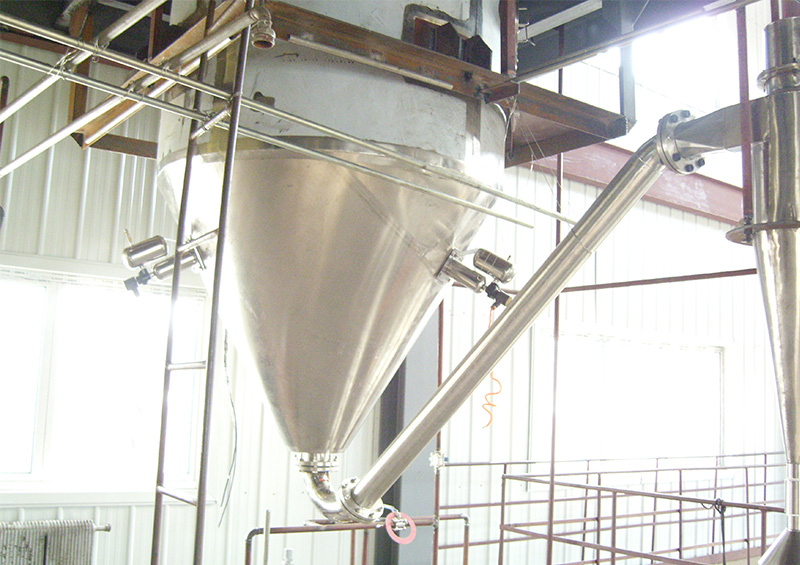
Primary Collection: Happens at the bottom of the drying chamber, often via gravity to a cone, especially for co-current designs. Cyclonic separators are sometimes integrated at the chamber outlet.
Secondary Collection: High-efficiency systems capture fines escaping the primary chamber:
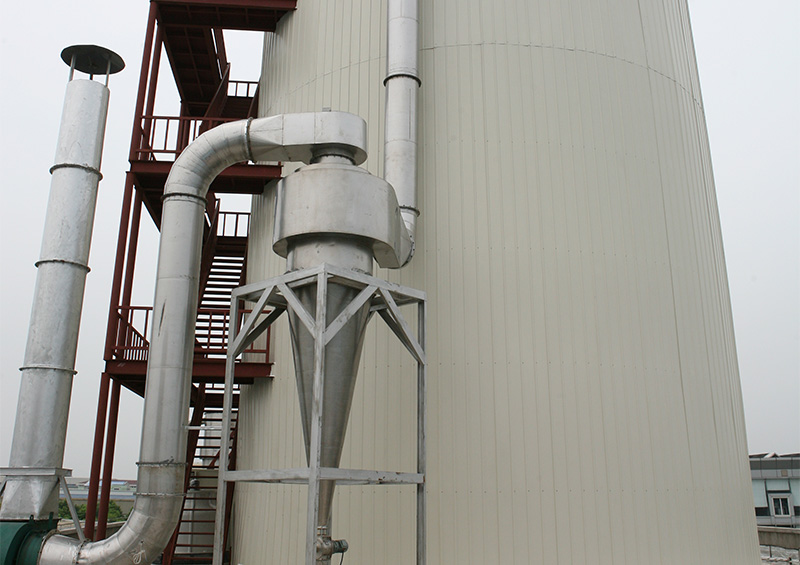
Cyclone Separators: Use centrifugal force – gas spirals downwards then upwards, throwing particles to the walls where they fall into a collection hopper. Moderate efficiency (~85-95% for >10µm).
Bag Filters (Fabric Filters): Exhaust gas passes through woven or felted fabric bags that trap particles. Very high efficiency (>99% for sub-micron particles). Require cleaning cycles (pulse-jet, shake).
Wet Scrubbers: Spray water or other liquid into the exhaust stream to capture particles. Used where products are hygroscopic, sticky, or pose explosion risks. Creates secondary liquid waste stream.
Electrostatic Precipitators (ESPs): Impart electrical charge to particles and capture them on oppositely charged plates. High efficiency on fine particles, less common in spray drying due to cost and complexity.
II. Why Spray Drying? Core Advantages & Benefits
The widespread adoption of spray drying stems from its unique combination of advantages:
Continuous Operation: Enables high throughput, consistent product quality, ease of automation, and integration with upstream/downstream processes compared to batch drying (e.g., tray, freeze drying).
Suitability for Diverse Feeds: Can handle solutions, suspensions (slurries), emulsions, and pumpable pastes, significantly broadening its applicability.
Preservation of Quality: The rapid drying process (seconds to a few seconds contact time) minimizes thermal exposure, making it suitable for thermally sensitive materials like foods, pharmaceuticals, and biologicals. Gentle handling (low shear during drying) can preserve delicate structures.
Controlled Powder Properties: Through precise control of atomization, feed concentration/solids content, drying temperatures (inlet/outlet), and flow patterns, spray drying offers significant control over:
Particle Size & Distribution
Particle Density (bulk, tapped, particle)
Particle Morphology (spherical, hollow, agglomerated, smooth, wrinkled)
Moisture Content
Flowability & Dustiness
Dispersibility & Solubility
Microencapsulation: A key strength. Spray drying is a premier method for encapsulating sensitive core materials (oils, flavors, vitamins, probiotics, enzymes, pigments, pharmaceuticals) within protective matrices (gums, starches, proteins, sugars). This shields the core from oxygen, light, moisture, or interactions, enhances stability, masks taste/odor, controls release, and converts liquids into free-flowing powders.
Dust Explosion Safety: Modern designs incorporate explosion protection features (venting panels, suppression systems, inertization using nitrogen) mitigating risks associated with combustible dusts. Design and operation follow ATEX/DSEAR standards.
Solvent Recovery: For non-aqueous feeds, closed-loop systems using inert gas (like N2) allow recovery of expensive or regulated solvents (e.g., ethanol), improving economics and environmental compliance.
Scale-up Feasibility: Processes developed on pilot-scale dryers often scale predictably to large industrial units.
Relatively Low Final Moisture: Achieves low residual moisture levels suitable for long-term storage stability.
III. Limitations and Challenges
Despite its strengths, spray drying has inherent limitations and challenges:
High Energy Consumption: Evaporating large quantities of water/solvent requires significant thermal energy. High inlet gas temperatures and large air volumes contribute to operating costs. Energy recovery systems (like exhaust air heat recovery) are crucial but complex.
Stickiness & Wall Deposition: Feeds with low Glass Transition Temperature (Tg) components (like sugars, low DE maltodextrin) can become sticky or thermoplastic at elevated temperatures. This causes particles to adhere to chamber walls ("wall deposition"), leading to product loss, operational instability, fire hazard (smoldering), and potential contamination. Formulation strategies (raising Tg) or specialized chamber designs are needed.
Limited Particle Size & Morphology: Achieving very large (> 200 µm) or extremely uniform spherical particles can be challenging and often requires significant optimization or agglomeration downstream. Morphology (e.g., dense particles vs. hollow spheres) is inherently linked to formulation and drying kinetics.
Volatiles Loss: Highly volatile components (aromas, flavors) can be stripped off during drying, necessitating encapsulation strategies or higher feed loads.
Difficulty with Very Viscous Feeds: High viscosity (> 1000 cP) can impede atomization and flow, requiring feed pre-heating, dilution (increasing drying load), or specialized high-pressure nozzles/discs.
Large Footprint: Industrial-scale spray dryers, especially those with tall chambers and ancillary equipment (fans, filters, heaters, conveyors), require substantial space.
Product Degradation: While gentle for some, heat and/or oxygen exposure can still degrade sensitive proteins, enzymes, probiotics, or vitamins. Strict control and inertization are vital. Denaturation or aggregation can occur.
Fine Generation: The process inherently creates a fraction of very fine particles (<10µm) which can challenge collection efficiency (cyclones less effective) and contribute to dustiness. Agglomeration techniques are often needed.
IV. Ubiquitous Applications Across Industries
The versatility of spray drying fuels its application across a vast industrial landscape:
Food & Dairy Industry:
Milk Powders: Skim milk powder (SMP), whole milk powder (WMP), infant formula base powders – the absolute cornerstone of industrial dairy processing.
Whey & Derivatives: Whey powder, demineralized whey powder, whey protein concentrates (WPC), whey protein isolates (WPI), lactose.
Egg Powders: Whole egg, egg yolk, egg white powder.
Beverages: Instant coffee, tea, cocoa powder, fruit/vegetable juice powders (often encapsulated to preserve flavor/vitamins).
Starches & Derivatives: Modified starches (used as thickeners, stabilizers).
Flavors & Additives: Encapsulated flavors, enzymes (e.g., rennet, pectinase), vitamins (fortification).
Soups & Sauces: Soup powders, gravy powders.
Specialty: Instant tea/coffee creamers, functional food ingredients.
Pharmaceutical & Nutraceutical Industry:
API Powders: Converting Active Pharmaceutical Ingredient (API) solutions or suspensions into free-flowing, stable powders suitable for tableting, capsule filling, or as intermediates.
Excipients: Production of spray-dried excipients like mannitol, lactose for direct compression, microcrystalline cellulose (MCC).
Microencapsulation: Protecting sensitive APIs (peptides, proteins, vaccines), controlling release profiles (sustained, delayed, enteric), masking bitter taste (e.g., antibiotics). Common carriers: polymers, modified starches, cyclodextrins. Encapsulation of probiotics (bacteria, yeast) for gut health supplements.
Vaccines & Biologics: Stabilizing labile proteins, viruses, or bacterial antigens into powders potentially enabling room-temperature stability (lyophilization alternative).
Herbal Extracts: Converting botanical extracts into standardized powder forms for supplements or formulations.
Chemical & Industrial Sectors:
Detergents & Cleaning Products: Spray-dried base powders for laundry detergents, dishwashing detergents (providing bulk, flow, solubility, incorporation of bleach/active).
Ceramic Powders: Production of free-flowing, uniform powders for pressing/sintering processes (e.g., alumina, zirconia, specialty ceramics). Drying ceramic slurries efficiently.
Catalysts: Producing porous catalyst supports or impregnated catalysts with high surface area.
Pigments & Dyes: Creating easy-to-handle powder forms of organic and inorganic pigments.
Polymer Powders: Spray-dried polymers used in coatings, adhesives, or as processing aids (e.g., PVA, cellulose derivatives).
Mineral Powders: Calcium carbonate, clay minerals, silica products. Handling large tonnages.
Biotechnology & Fermentation:
Enzyme Powders: Stabilizing industrial enzymes (e.g., proteases, amylases, lipases) for detergents, textiles, food processing.
Yeast Powders: Active dry yeast (ADY) for baking, brewers yeast.
Fermentation Broth Drying: Converting liquid fermentation broths containing products like organic acids, amino acids, or microbial biomass into powders.
Environmental Applications:
Waste Stream Processing: Drying sludge from wastewater treatment or industrial processes to reduce volume/weight for disposal or further processing (e.g., incineration).
Flue Gas Treatment: In some absorption processes for sulfur dioxide removal.
Specialty Applications:
Instantizing/Agglomerating: Using fines return or integrated fluidized beds downstream of the main dryer to build larger, free-flowing agglomerated particles with superior wetting/dispersing properties (e.g., instant coffee, milk powders, beverage mixes).
Nanoparticles: Specialized configurations can produce nanoparticles or nanostructured composites.
Aseptic Spray Drying: For sterile products like some nutritional formulations or pharmaceutical intermediates.
V. Process Optimization & Control
Achieving the desired product specifications and ensuring economical operation requires careful attention to numerous parameters:
Feed Properties: Composition, solids concentration, viscosity, surface tension, temperature, rheology (Newtonian/non-Newtonian), thermal sensitivity, Tg profile. Pre-concentration via evaporation is common to reduce drying load.
Atomization: Type (rotary, nozzle), operating pressure/RPM, flow rates. Primary control over particle size distribution.
Drying Air: Inlet temperature, outlet temperature (indicator of moisture level), flow rate (velocity), humidity. Critical for heat/mass transfer rates and product temperature exposure.
Chamber Design & Flow Pattern: Size, cone angle, air disperser design. Impacts residence time and deposition tendencies.
Exhaust System Design: Collection efficiency, pressure drop, minimizing fines recirculation.
Advanced Control Systems: Modern plants utilize sophisticated PLC/DCS systems monitoring parameters like outlet temperature, pressure drop across filters, exhaust humidity, motor loads. Automation ensures consistency and reduces operator intervention.
Computational Fluid Dynamics (CFD): Increasingly used to model complex chamber flow patterns, droplet trajectories, and heat/mass transfer for optimizing design and troubleshooting.
The spray dryer remains an indispensable piece of industrial equipment, quietly underpinning countless products that populate our daily lives and drive modern manufacturing. Its unique ability to transform liquids and slurries into stable, free-flowing powders in a single, continuous step offers unparalleled advantages in terms of productivity, powder property control (especially particle size and microencapsulation), and suitability for sensitive materials. While challenges like energy consumption, stickiness, and dustiness exist, ongoing research into formulation science, advanced drying chamber designs, improved atomization technology, and sophisticated control systems continues to expand its capabilities and address limitations. From the coffee we drink and the milk in our cereals to life-saving medicines and high-tech ceramics, the versatility and efficiency of the spray dryer ensure its position as a cornerstone technology in diverse industries worldwide for the foreseeable future. Its adaptability to handle such a wide spectrum of feedstocks while tailoring final powder characteristics makes it truly the "versatile workhorse" of powder production.