





The Coffee Factory Machine: Processing and Technologies
 Nov 20, 2025|
 View:1444
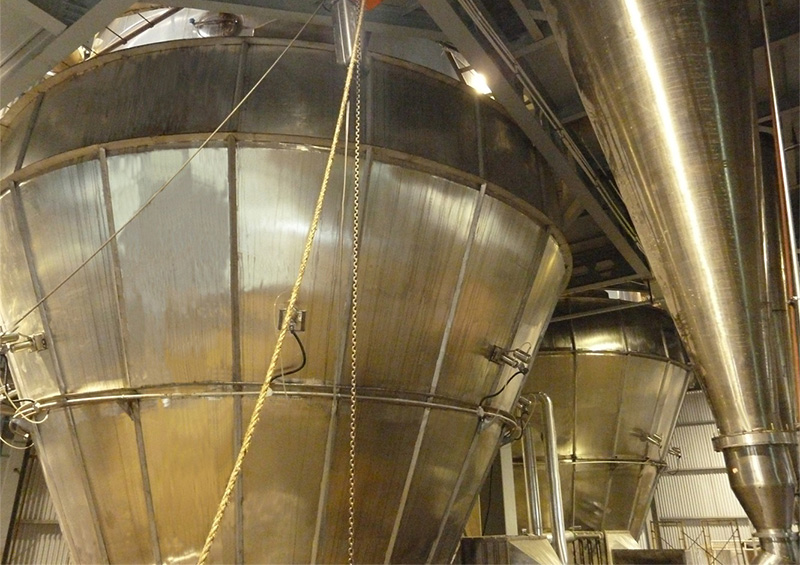
The journey of coffee from a cherry on a bush to the aromatic grounds in our cups is a complex alchemy of agriculture, chemistry, and engineering. While the coffee plant itself is the source of potential, it is within the coffee factory that this potential is meticulously unlocked, standardized, and preserved. At the heart of this transformation lie sophisticated coffee processing technologies, which define the bean's fundamental character, and advanced machinery like the spray dryer, which is instrumental in creating one of the world's most popular coffee formats: instant coffee. This article delves into this industrial ecosystem, exploring how processing methods shape flavor and how technology like the spray dryer machine enables global coffee consumption on an unprecedented scale.
The Foundation: Primary Coffee Processing Technologies
Before any coffee factory machine can work its magic, coffee beans must be extracted from the coffee cherry. The method chosen for this initial processing is arguably the most significant factor influencing the green coffee bean's inherent flavor profile. There are three primary methods, each with distinct mechanical requirements.
1. The Washed (or Wet) Process
This method prioritizes clarity and acidity. The process begins at the coffee factory receiving station, where cherries are floated in water channels to separate ripe from unripe fruit. The ripe cherries are then fed into a depulping machine, which mechanically removes the outer skin and pulp. The beans, still coated in a sticky mucilage, are then fermented in water tanks for 12 to 72 hours. Natural enzymes break down the mucilage, after which the beans are thoroughly washed in large mechanical washers. Finally, the beans are dried, either in the sun on patios or using mechanical dryers that blow hot air through the beans.
Impact on Flavor: Washed coffees are known for their clean, consistent, and bright cup profile, with pronounced acidity and clarity of origin characteristics. The machinery involved—flotation tanks, depulpers, fermentation tanks, and mechanical washers—must operate with precision to control fermentation time and ensure complete mucilage removal without damaging the bean.
2. The Natural (or Dry) Process
This is the oldest and most traditional method, renowned for producing coffees with heavy body, fruity sweetness, and complex, often wild, flavors. The process is mechanically simpler but requires significant space and stable weather. Whole coffee cherries are spread out in a thin layer on large patios or raised African beds to dry in the sun for several weeks. They are regularly turned by mechanical rakes or by hand to prevent mold. Once the moisture content of the cherry is sufficiently low, the entire dried husk (skin, pulp, and parchment) is mechanically removed in a single step by a hulling machine.
Impact on Flavor: As the beans dry inside the fruit, they absorb sugars and fruity compounds from the cherry, leading to a full-bodied, sweet, and often winey or berry-like flavor. The key machinery here includes mechanical rakes for turning and large, specialized hullers designed to crack the brittle dried cherry without shattering the bean inside.
3. The Honey (or Pulped Natural) Process
A hybrid method, the Honey process offers a middle ground between Washed and Natural coffees. The cherry skin is removed by a depulping machine, but the process is adjusted to leave a controlled amount of the mucilage (the sticky, honey-like substance) on the bean. The beans, coated in this mucilage, are then dried. The amount of mucilage left on determines the classification (e.g., White, Yellow, Red, Black Honey). Mechanical dryers are often used to provide greater control over the drying rate, which is critical to preventing spoilage in this sticky, sugar-rich environment.
Impact on Flavor: Honey processed coffees typically exhibit more body and sweetness than Washed coffees but more clarity and less fermental fruitiness than Natural coffees. They offer a balanced profile with creamy body and muted acidity. The depulping machine's calibration is crucial here, as it must be set to leave the exact desired amount of mucilage.
The Pinnacle of Industrialization: The Spray Dryer Machine and Instant Coffee Production
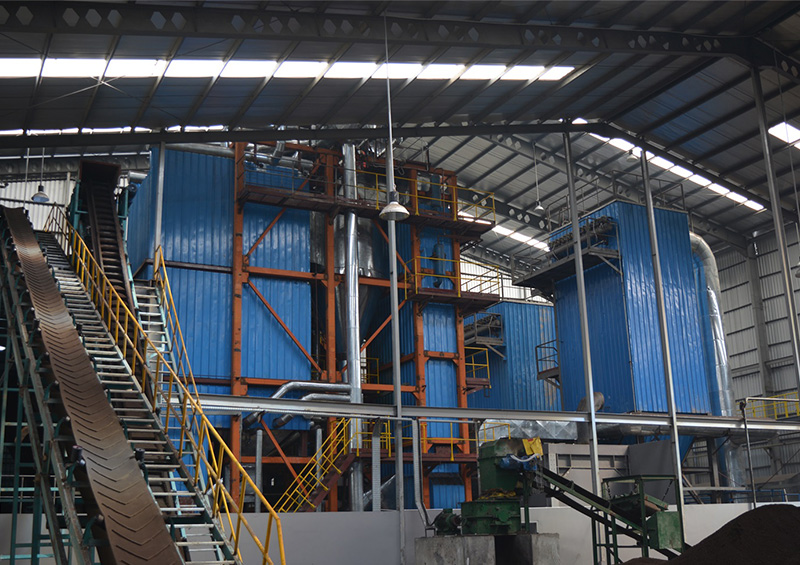
While the primary processing methods define the raw material, perhaps the most iconic machine in the mass-production coffee factory is the spray dryer. This technology is dedicated to the production of instant coffee, a product that values convenience, shelf stability, and solubility above all else.
The process begins with roasting and grinding beans, often a blend designed for a consistent and robust flavor. The ground coffee is then brewed on an industrial scale in massive percolation columns, creating a highly concentrated coffee extract. This liquid coffee is where the spray dryer takes center stage.
The principle of spray drying is to rapidly transform a liquid feed into a dry powder by atomizing it into a hot gas. Here is a step-by-step look at the process:
Concentration and Pre-heating: The liquid coffee extract is first concentrated, often using vacuum evaporators, to increase solid content. This reduces the amount of water that needs to be removed in the dryer, improving energy efficiency.
Atomization: The concentrated coffee solution is pumped to the top of a large, cylindrical tower—the spray dryer itself. It is then fed through an atomizer, which can be a high-pressure nozzle or a high-speed rotating disc. This device breaks the liquid into billions of tiny droplets, creating a fine mist or spray. The enormous combined surface area of these droplets is the key to rapid drying.
Drying Chamber: Simultaneously, hot, dry air (typically between 200°C and 300°C) is blown into the top of the chamber. The tiny droplets of coffee extract come into immediate contact with this hot air. The water content flashes off almost instantaneously, leaving behind fine, solid particles of coffee.
Separation and Cooling: The dried powder, being heavier, falls to the bottom of the cone-shaped chamber. The moist air is exhausted out of the top. The powder is then continuously removed from the chamber and cooled to prevent heat degradation.
The result is a fine, free-flowing powder that dissolves instantly in water. However, traditional spray-dried coffee has a limitation: the intense and rapid heat exposure can degrade volatile aromatic compounds, leading to a less complex flavor profile compared to brewed coffee. To combat this, modern factories often include aroma recovery systems that capture the aromas released during early stages (like grinding and roasting) and re-inject them into the final powder.
Furthermore, to create the granular instant coffee that many consumers prefer (which dissolves more slowly and is less dusty), a second step called agglomeration is used. The fine powder is slightly moistened and tumbled, causing the particles to stick together and form larger, more porous granules. Another advanced technology, freeze-drying, is also used for high-quality instant coffee, as it preserves more aroma, but spray drying remains the faster and more cost-effective method for mass production.
The modern coffee factory is a testament to human ingenuity in the pursuit of flavor and convenience. The journey begins with fundamental coffee processing technologies—Washed, Natural, and Honey—where mechanical equipment like depulpers, washers, and hullers lay the flavor foundation. This groundwork enables the sophisticated engineering of machines like the spray dryer, which transforms a perishable beverage into a stable, globally accessible product.