





Guide to Milk Powder Processing: From Liquid to Powder
 Nov 14, 2025|
 View:3325
Milk powder production represents one of the most significant advancements in food preservation technology, enabling the transformation of perishable liquid milk into a stable, shelf-stable product with extended viability. This complex industrial process involves precise engineering, controlled environments, and sophisticated milk powder equipment to ensure quality, safety, and nutritional integrity. The global dairy industry relies heavily on milk powder as a versatile ingredient for various applications, from infant formula to baked goods and nutritional supplements.
The Fundamentals of Milk Powder Production
Milk powder production begins with the collection and standardization of raw milk. Upon arrival at processing facilities, milk undergoes rigorous quality checks for composition, acidity, and microbial content. The standardization process adjusts fat content to meet specific product requirements, whether for whole milk powder, skim milk powder, or specialized formulations. Pasteurization follows, eliminating pathogenic microorganisms through heat treatment at 72°C for 15 seconds, ensuring product safety while preserving nutritional qualities.
The preconcentration phase utilizes evaporation technology to remove approximately 50% of water content before spray drying. Multiple-effect evaporators operate under vacuum conditions at temperatures between 65-70°C, efficiently concentrating milk while minimizing thermal damage. This concentration step significantly reduces energy requirements for subsequent drying stages and enhances the overall efficiency of milk powder production. The concentrated milk, now resembling a viscous liquid, contains about 45-50% total solids compared to the original 12-13% in raw milk.
Advanced milk powder equipment monitors critical parameters throughout preprocessing, including temperature control, flow rates, and solids concentration. Automated systems maintain consistent operational conditions, while integrated cleaning systems ensure hygienic processing environments between production runs. The precision achieved during these initial stages directly influences the final product's solubility, flavor, and shelf-life characteristics.
Spray Dried Milk Powder: The Core Technology
The transformation of concentrated milk into spray dried milk powder represents the technological heart of milk powder production. This method dominates industrial-scale operations for its efficiency, scalability, and ability to produce consistent quality powder. The process begins when concentrated milk is pumped under high pressure to the drying chamber's atomization system.
Atomization constitutes the critical first step in spray drying, where specialized nozzles or rotary atomizers disperse the concentrated milk into billions of microscopic droplets. Nozzle atomizers force liquid through small openings under pressures reaching 2,000-3,000 psi, creating fine droplets with diameters typically ranging from 10-200 micrometers. Alternatively, rotary atomizers use centrifugal force by distributing liquid onto a rapidly spinning disk operating at 10,000-30,000 RPM. The droplet size distribution directly influences drying efficiency and final powder characteristics, with smaller droplets offering greater surface area for rapid moisture evaporation.
Within the milk dryer, these droplets encounter a controlled flow of hot air ranging from 180-200°C at the inlet. The extreme temperature difference causes instantaneous moisture evaporation from the droplet surface, forming a semi-permeable skin that regulates further moisture migration. This rapid drying occurs within seconds, preventing thermal degradation while effectively reducing moisture content to 3-4%. The temperature gradient throughout the system ensures that powder particles themselves experience much lower temperatures (40-50°C) despite the high inlet air temperatures, preserving heat-sensitive components.
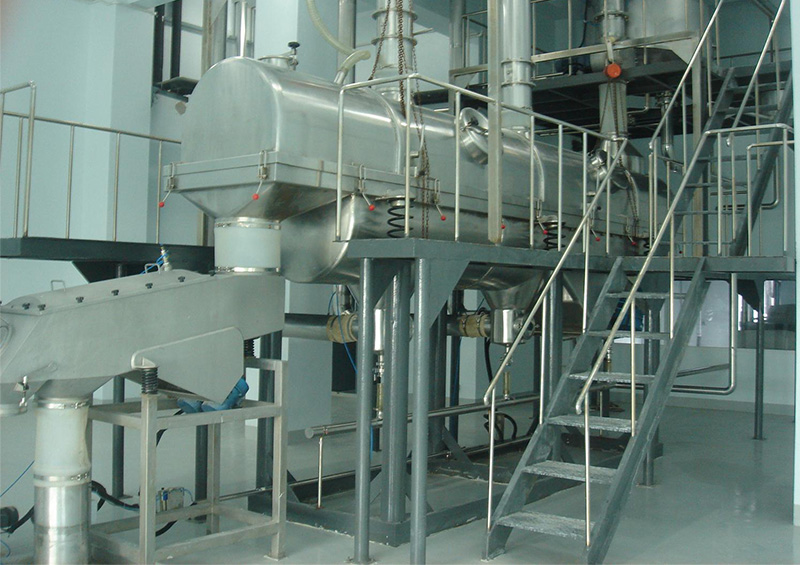
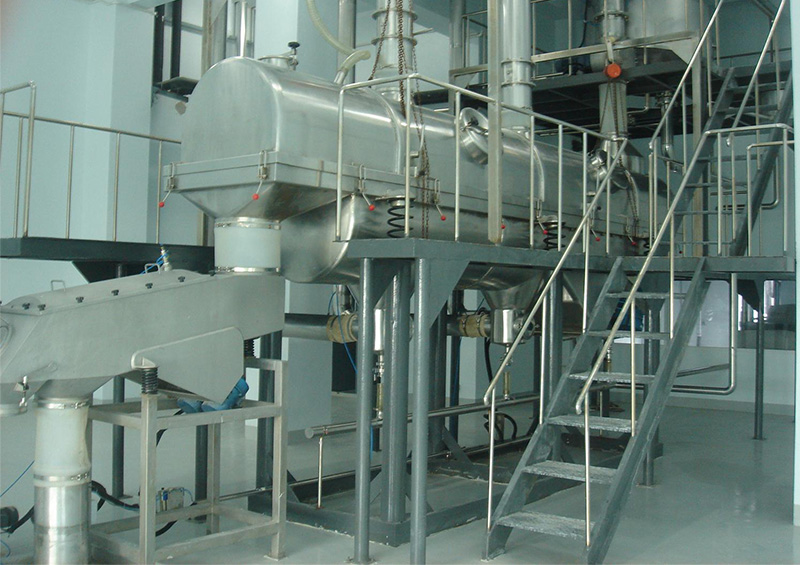
The design of modern milk dryer machines incorporates multiple stages for enhanced efficiency. Two-stage systems include an integrated fluidized bed for secondary drying and cooling, while three-stage configurations further optimize heat utilization and product quality. These advanced systems can achieve thermal efficiencies up to 50-60%, significantly reducing energy consumption compared to single-stage dryvers. The resulting spray dried milk powder exhibits excellent solubility, uniform particle size, and minimal thermal damage to proteins and vitamins.
Milk Dryer Technology and Equipment Innovations
The evolution of milk dryer machine technology has revolutionized milk powder production capabilities. Contemporary industrial dryers stand as engineering marvels, often reaching heights of 20-30 meters with diameters exceeding 10 meters. Their construction typically utilizes stainless steel for all product-contact surfaces, ensuring corrosion resistance and facilitating rigorous cleaning protocols. Insulation systems minimize heat loss while specialized interior finishes prevent powder accumulation on chamber walls.
Modern milk dryer machines incorporate sophisticated air handling systems that precisely manage temperature, humidity, and airflow patterns. Primary air heaters utilize steam, thermal oil, or direct gas firing to generate the necessary drying temperatures, while secondary systems condition air for powder cooling and transport. Air filtration systems ensure incoming air meets strict purity standards, and exhaust systems remove moist air while recovering powder particles through high-efficiency cyclones or bag filters.
The integration of programmable logic controllers (PLC) and supervisory control and data acquisition (SCADA) systems has transformed operational control in milk powder production. These digital platforms continuously monitor hundreds of parameters including inlet/outlet temperatures, pressure differentials, airflow rates, and powder moisture content. Advanced algorithms automatically adjust operational parameters to maintain optimal drying conditions despite variations in feed concentration or ambient conditions. Real-time data logging provides comprehensive production records for quality assurance and traceability requirements.
Recent innovations in milk powder equipment focus on sustainability and energy recovery. Heat recovery systems capture thermal energy from exhaust air to preheat incoming fresh air, reducing fuel consumption by 15-20%. Closed-cycle drying systems utilizing inert gases like nitrogen further enhance efficiency while preventing oxidative damage to sensitive components. These advancements address both economic and environmental considerations in modern dairy processing operations.
Specialized Milk Powder Equipment for Quality Assurance
The supporting infrastructure within milk powder production facilities comprises numerous specialized systems that collectively ensure final product quality. Powder handling equipment includes pneumatic conveying systems that transport powder from dryers to storage silos without contamination or degradation. These systems utilize filtered air to move powder through enclosed pipelines, with carefully controlled velocities to prevent particle damage or segregation.
Intermediate storage silos feature specialized design elements critical for maintaining powder quality. Cone-bottom configurations promote complete discharge while mass-flow designs prevent powder stagnation. Temperature and humidity control systems maintain optimal storage conditions, and inert gas blanketing prevents oxidation during storage. Integrated screening systems remove potential agglomerates before packaging, ensuring uniform particle size distribution.
Modern milk powder equipment incorporates advanced analytical instrumentation for real-time quality monitoring. Near-infrared (NIR) sensors continuously measure moisture content, fat concentration, and protein levels without requiring manual sampling. Laser diffraction particle size analyzers monitor powder morphology, while automated sampling systems collect representative samples for laboratory validation. This integration of analytical technologies enables immediate corrective actions when parameters deviate from specifications.
Packaging systems represent the final stage in milk powder production, where precision equipment fills powder into various containers under controlled atmospheric conditions. Automated form-fill-seal machines create multi-layer packaging with integrated barriers against moisture, oxygen, and light. Modified environment packaging techniques replace oxygen with inert gases like nitrogen or carbon dioxide, significantly extending shelf life by preventing oxidative deterioration. These specialized packaging solutions ensure that the quality achieved during processing is maintained throughout distribution and storage.
Quality Control and Future Directions in Milk Powder Production
Rigorous quality control protocols permeate every stage of milk powder production, beginning with raw material inspection and continuing through final product release. Laboratory analyses verify compliance with compositional standards for protein, fat, lactose, moisture, and mineral content. Functional properties including solubility index, dispersibility, wettability, and bulk density are measured against established specifications. Microbiological testing ensures compliance with food safety standards, while sensory evaluation panels assess flavor, color, and aroma characteristics.
The future of milk powder production points toward increasingly sustainable and intelligent operations. Emerging technologies include membrane filtration systems that enhance preconcentration efficiency, reducing thermal energy requirements for evaporation and drying. Advanced spray dryer designs incorporate computational fluid dynamics modeling to optimize chamber geometry and airflow patterns. Industry 4.0 concepts introduce digital twin technology, creating virtual replicas of production systems for simulation, optimization, and predictive maintenance.
Nanotechnology applications show promise for enhancing the functional properties of spray dried milk powder, particularly for specialized nutritional products. Encapsulation techniques protect sensitive bioactive compounds during processing and storage, while controlled release mechanisms improve bioavailability. These innovations expand the application potential of milk powder beyond traditional uses, creating opportunities in medical nutrition, sports science, and personalized food products.
As global demand for dairy products continues to grow, milk powder remains a critical component of sustainable food systems. The ongoing refinement of milk powder production technologies balances efficiency, quality, and environmental responsibility, ensuring that this versatile ingredient continues to meet evolving consumer needs and regulatory standards. Through continued innovation in milk dryer machines and associated equipment, the dairy industry maintains its commitment to delivering safe, nutritious, and high-quality powder products to markets worldwide.