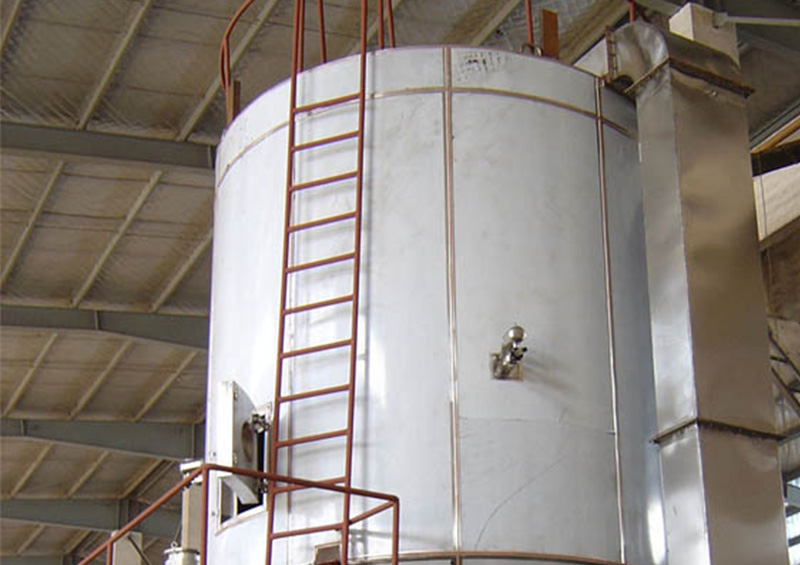






Extract Spray Dryer: Principles, Applications
 Jul 18, 2025|
 View:1665
Spray drying is a widely used industrial process for transforming liquid solutions, suspensions, or emulsions into dry powder form. Among its various applications, extract spray drying plays a crucial role in industries such as pharmaceuticals, food, nutraceuticals, and cosmetics. This method is particularly valuable for preserving bioactive compounds, improving stability, and enhancing the solubility of extracts.
This article explores the principles of extract spray drying, its key components, applications across industries, and recent technological advancements.
Principles of Extract Spray Drying
Spray drying involves three fundamental stages:
Atomization – The liquid extract is dispersed into fine droplets using a nozzle or rotary atomizer.
Drying – Hot air rapidly evaporates the moisture from the droplets, leaving behind solid particles.
Separation – The dried powder is collected using a cyclone or bag filter, while the exhaust air is expelled.

Key Parameters Influencing Spray Drying Efficiency
Inlet Temperature – Typically ranges from 150°C to 220°C, depending on the extract’s heat sensitivity.
Feed Rate – Affects droplet size and drying efficiency.
Atomization Pressure – Determines droplet size distribution.
Carrier Agents – Such as maltodextrin or gum arabic, improve powder stability and prevent stickiness.
Components of an Extract Spray Dryer
A typical extract spray dryer consists of:
Feed System – Pumps the liquid extract into the drying chamber.
Atomizer – Converts the liquid into fine droplets (pressure nozzle, rotary disc, or ultrasonic atomizer).
Drying Chamber – Where hot air interacts with droplets to evaporate moisture.
Air Heater & Blower – Provides controlled hot air flow.
Powder Collection System – Cyclones, bag filters, or electrostatic precipitators capture dried particles.
Exhaust System – Removes humid air after drying.

Applications of Extract Spray Drying
1. Pharmaceutical Industry
Herbal Extracts – Preserves bioactive compounds (e.g., ginseng, turmeric, echinacea).
Probiotics & Enzymes – Encapsulation improves stability and shelf life.
Drug Formulations – Enhances solubility and bioavailability of poorly water-soluble drugs.
2. Food & Nutraceuticals
Fruit & Vegetable Extracts – Produces stable powders for beverages and supplements.
Essential Oils – Microencapsulation prevents oxidation and volatilization.
Protein Powders – Used in sports nutrition and functional foods.
3. Cosmetics & Personal Care
Plant-Based Extracts – Used in powdered face masks, serums, and supplements.
Fragrance Encapsulation – Extends scent longevity in perfumes and lotions.
4. Industrial Applications
Bioactive Compounds – Used in pesticides, fertilizers, and biocontrol agents.
Flavor & Colorants – Produces free-flowing powders for food and beverage industries.

Advantages of Extract Spray Drying
✅ Preservation of Bioactive Compounds – Rapid drying minimizes thermal degradation.
✅ Improved Solubility – Fine powder structure enhances dissolution.
✅ Long Shelf Life – Low moisture content prevents microbial growth.
✅ Controlled Particle Size – Adjustable parameters allow customization for different applications.
✅ Scalability – Suitable for both laboratory and industrial-scale production.
Challenges & Solutions
1. Heat Sensitivity of Extracts
Solution: Use lower inlet temperatures or two-stage drying (spray drying followed by vacuum drying).
2. Powder Stickiness & Hygroscopicity
Solution: Incorporate carrier agents (maltodextrin, cyclodextrins) to improve flowability.
3. Loss of Volatile Compounds
Solution: Encapsulation techniques (e.g., nano-spray drying) retain volatile aromas.
4. High Energy Consumption
Solution: Closed-loop spray drying recycles exhaust heat, improving energy efficiency.
Extract spray drying is a versatile and efficient technology for converting liquid extracts into stable, high-quality powders. Its applications span pharmaceuticals, food, cosmetics, and industrial sectors, offering benefits such as enhanced stability, solubility, and bioavailability.