





What is a spray dryer in the food industry?
 Jul 11, 2025|
 View:2205
Spray drying is a widely used industrial process for transforming liquid or slurry-based food products into dry powders. This technique is highly efficient, scalable, and capable of preserving the nutritional and sensory qualities of food materials. The food industry extensively employs spray drying for products such as milk powder, coffee, tea extracts, fruit juices, and flavorings.
This article explores the principles of spray drying, its key components, applications in the food sector, advantages, and challenges.
1. Principles of Spray Drying
Spray drying involves three fundamental stages:
Atomization – The liquid feed is dispersed into fine droplets using a nozzle or rotary atomizer.
Drying – Hot air rapidly evaporates moisture from the droplets, forming dry particles.
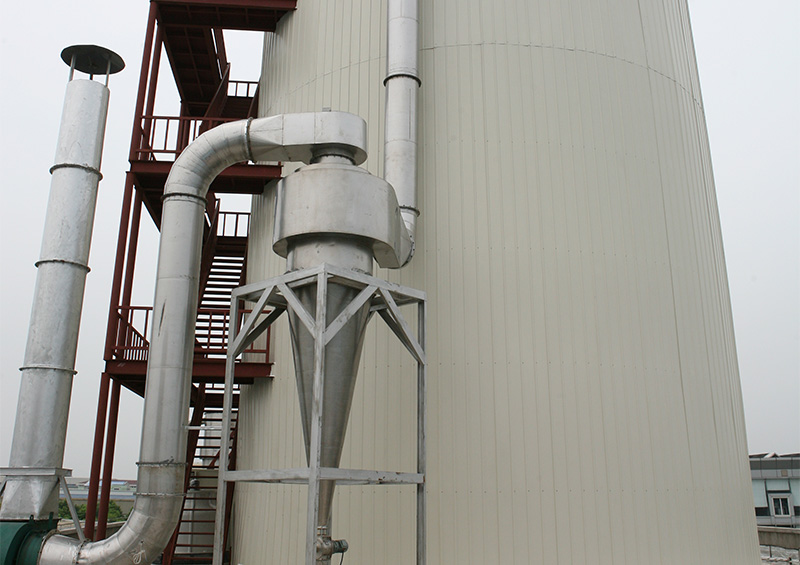
Separation – The dried powder is separated from the exhaust air using cyclones or bag filters.
The process is continuous, allowing large-scale production while maintaining product consistency.
2. Key Components of a Spray Dryer
A typical spray dryer consists of:
Feed System – Pumps the liquid food material into the drying chamber.
Atomizer – Breaks the liquid into fine droplets (pressure nozzles, rotary discs, or ultrasonic atomizers).
Heating System – Supplies hot air (typically 150–250°C) to evaporate moisture.
Drying Chamber – Where evaporation occurs, forming dry particles.
Powder Recovery System – Collects the dried product (cyclones, filters, or electrostatic precipitators).
Exhaust System – Removes humid air after drying.

3. Applications in the Food Industry
Spray drying is used for a variety of food products:
A. Dairy Products
Milk Powder – Whole milk, skim milk, and whey protein powders are produced by spray drying.
Infant Formula – Ensures easy reconstitution and long shelf life.
B. Beverages & Instant Products
Coffee & Tea Extracts – Spray drying converts liquid extracts into soluble powders.
Fruit Juices – Powders like orange, mango, and strawberry are used in instant drinks and flavorings.
C. Functional Foods & Additives
Probiotics & Enzymes – Encapsulation via spray drying enhances stability.
Flavorings & Colorants – Provides concentrated, easy-to-handle powders.
D. Egg & Meat Products
Egg Powder – Used in baking and processed foods.
Meat & Fish Protein Powders – Applied in soups, snacks, and supplements.
E. Bakery & Confectionery
Starch & Sweeteners – Spray-dried glucose and maltodextrin improve texture and solubility.

4. Advantages of Spray Drying in Food Processing
Rapid Drying – High evaporation rates due to large surface area of droplets.
Preservation of Quality – Low thermal exposure retains flavors, colors, and nutrients.
Powder Properties – Produces free-flowing, uniform particles with controlled bulk density.
Scalability – Suitable for both small-scale and industrial production.
Extended Shelf Life – Reduces water activity, inhibiting microbial growth.
Encapsulation Capability – Protects sensitive ingredients (e.g., vitamins, probiotics).
5. Challenges & Limitations
Despite its benefits, spray drying has some drawbacks:
High Energy Consumption – Requires significant heat input.
Stickiness Issues – Sugary or high-fat foods may adhere to dryer walls.
Particle Size Control – Achieving uniform particle distribution can be difficult.
Thermal Degradation Risk – Some heat-sensitive compounds may degrade.
To mitigate these issues, modifications such as two-stage drying, agglomeration, and use of carrier agents (e.g., maltodextrin) are employed.
6. Innovations & Future Trends
Recent advancements in spray drying include:
Nano Spray Drying – Produces ultrafine particles for enhanced bioavailability.
Low-Temperature Spray Drying – Preserves heat-sensitive bioactive compounds.
Computational Modeling – Optimizes drying parameters for efficiency.
Sustainable Practices – Waste heat recovery and renewable energy integration.
Spray drying is a cornerstone technology in the food industry, enabling the production of stable, high-quality powdered products. Its versatility, efficiency, and ability to preserve nutritional and sensory attributes make it indispensable for dairy, beverages, functional foods, and more.