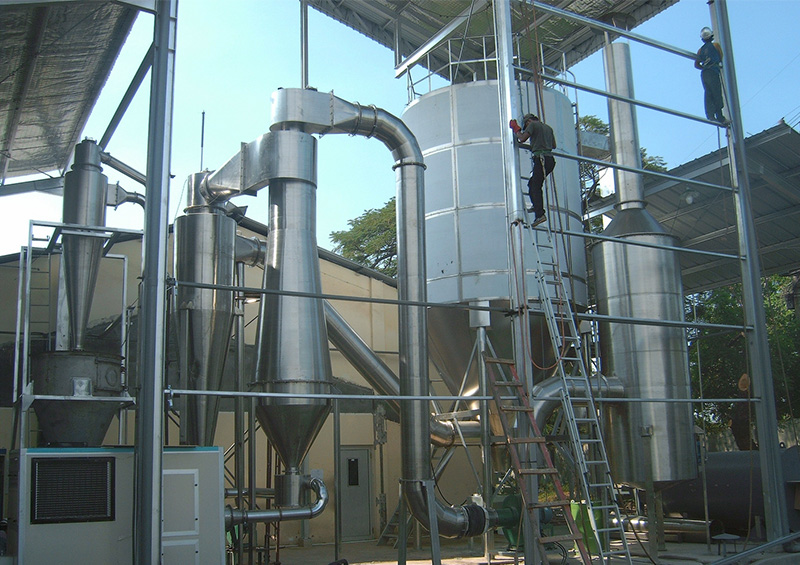






Spray Dryer Machines for the Chemical Industry
 Sep 05, 2025|
 View:2067
The Fundamental Principles of Spray Drying
At its core, spray drying is a continuous particle-processing operation. It involves the transformation of a feed from a fluid state—which can be a solution, suspension, or emulsion—into a dried particulate form by spraying it into a hot drying medium, typically air or nitrogen (in inert drying processes).
This process can be broken down into three fundamental stages:
Atomization: The liquid feed is pumped to an atomizer located at the top of the drying chamber. This is the most critical step, as it dictates the final powder's particle size distribution, bulk density, and morphology. The atomizer breaks up the liquid into a fine spray of droplets. Common atomizer types include:
Rotary (Wheel) Atomizers: A high-speed rotating disk centrifugal forces the liquid to its periphery, breaking it into droplets. This method produces a wide range of particle sizes and is excellent for high-capacity duties.
Pressure Nozzle Atomizers: The liquid is forced under high pressure through a small orifice, creating a spray. Nozzles tend to produce coarser, denser powders with a narrower particle size distribution.
Two-Fluid (Pneumatic) Nozzles: Compressed gas (usually air) is used to atomize the liquid, creating very fine droplets. This is ideal for smaller capacity production or when extremely fine powders are required.
Drying: The spray of droplets comes into immediate contact with the hot drying gas in the chamber. The enormous surface area of the millions of tiny droplets allows for incredibly rapid evaporation of moisture. The drying occurs in two phases: a constant rate period where surface moisture evaporates, followed by a falling rate period where internal moisture diffuses to the surface. The carefully controlled temperatures and airflow ensure that even heat-sensitive materials can be dried without significant degradation, as the evaporation process has a cooling effect on the particles themselves.
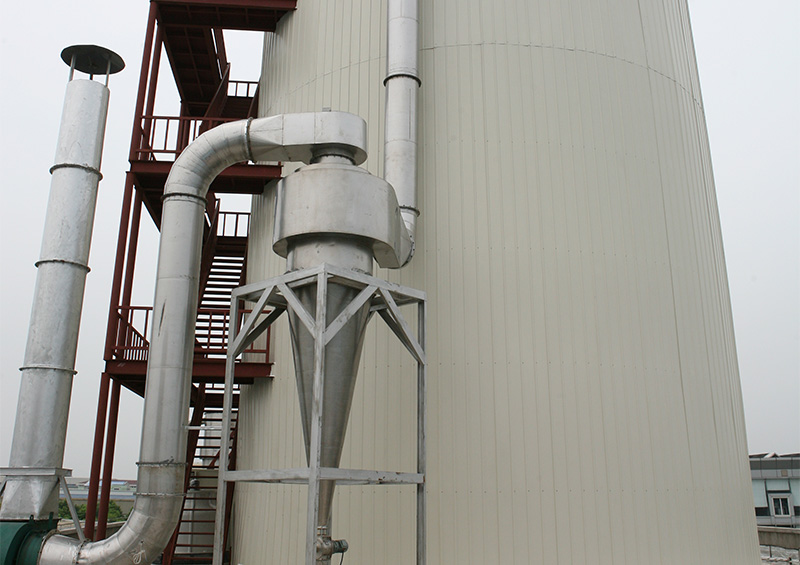
Separation: The dried particles, now in solid form, are separated from the humid exhaust gas. This is typically achieved through a combination of cyclones and bag filters. The powder is conveyed to a collection system (e.g., a rotary valve and bin), while the cooled, moisture-laden gas is expelled to the atmosphere or sent for heat recovery.
Why Spray Dryers are Dominant in the Chemical Industry
The widespread adoption of spray drying across countless chemical sectors is due to a compelling set of advantages that align perfectly with industrial needs:
Continuous Operation: Unlike batch dryers, spray dryers operate 24/7, enabling high-volume production, consistent product quality, and seamless integration into continuous processing lines. This maximizes efficiency and output.
Handles Heat-Sensitive Materials: The rapid drying kinetics (drying occurs in a matter of seconds) means the particle residence time at elevated temperatures is extremely short. This is paramount for products like enzymes, polymers, and certain catalysts that would denature or decompose under prolonged heat exposure.
Tailor-Made Powder Properties: Manufacturers have a high degree of control over the final product's characteristics. By adjusting parameters like atomizer type, inlet/outlet temperature, feed solids content, and drying gas flow, engineers can design powders with specific particle sizes, morphologies (e.g., hollow or solid spheres), bulk densities, flowabilities, and moisture contents.
Handles a Wide Range of Feedstocks: Spray dryers can process solutions, slurries, pastes, and even emulsions, making them incredibly flexible for different chemical processes.
Automation and Control: Modern spray dryers are integrated with sophisticated Process Control Systems (PCS) and SCADA systems, allowing for precise control over all parameters. This ensures batch-to-batch consistency, reduces operator error, and provides comprehensive data logging for quality assurance and traceability.

Key Applications Across the Chemical Sector
The versatility of spray drying is evidenced by its use in a breathtaking array of chemical sub-industries:
Detergents and Surfactants: A primary application. Spray drying is used to produce the familiar hollow, spherical beads of laundry and dishwashing detergents. This form enhances solubility, prevents dusting, and improves flowability for packaging. Raw slurry mixtures of surfactants, phosphates, silicates, and perfumes are dried into a consistent, high-quality consumer product.
Ceramics and Inorganic Chemicals: Advanced ceramics, catalysts, silica gels, pigments (e.g., titanium dioxide), and abrasives are often spray-dried. The process ensures a uniform, free-flowing powder that is essential for subsequent pressing and sintering processes in catalyst manufacturing or ceramic part production. It prevents segregation of components in a mixture, guaranteeing product homogeneity.
Polymers and Resins: Synthetic rubber (e.g., SBR, NBR), PVC, phenolic resins, and various other polymers are produced as powders via spray drying. This form is easier to handle, transport, and blend than liquid or solid blocks.
Dyes and Pigments: Organic and inorganic colorants are spray-dried to create dust-free, easily dispersible granules that exhibit excellent color strength and consistency for the plastics, paint, and textile industries.
Construction Chemicals: Additives for concrete and plaster, such as spray-dried powdered rheology modifiers and air-entraining agents, are valued for their precise dosing and rapid dispersion in mixing applications.
Advanced Materials: The production of microspheres, nano-particles, and encapsulated materials often relies on spray drying. It is a key technology for creating functional particles for drug delivery, agrochemicals (controlled-release pesticides and fertilizers), and specialty coatings.
Design Considerations and Innovations
Selecting and operating a spray dryer is a complex engineering task. Key considerations include:
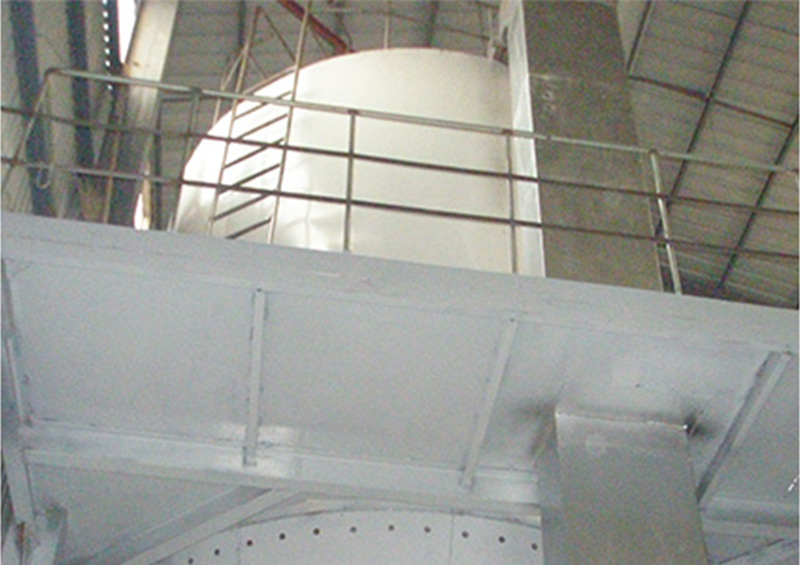
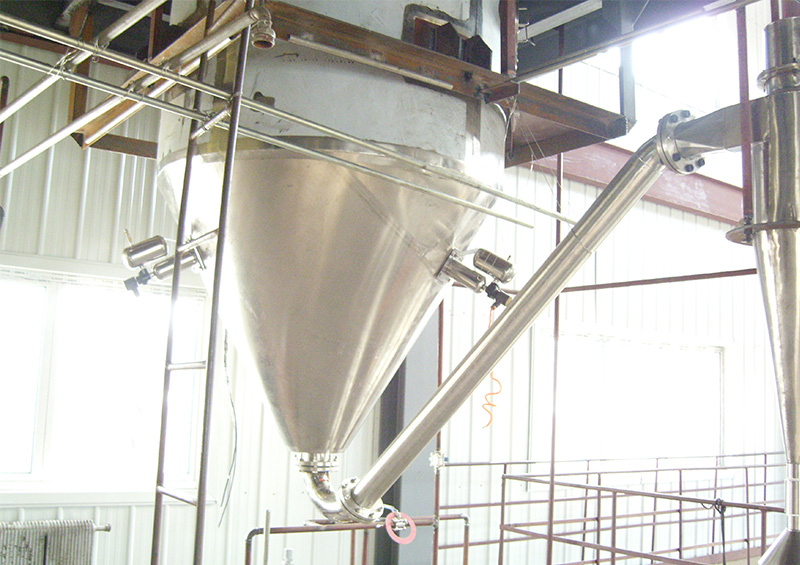
Drying Chamber Design: Cylindrical-conical chambers are common, but the size and shape depend on the atomizer and the required residence time.
Air Heating System: Can be direct (gas-fired) or indirect (steam, thermal oil, electric) depending on the product's sensitivity to combustion gases.
Inert Drying (Closed Loop): For organic solvents or highly oxygen-sensitive materials, the system operates as a closed loop, using inert gas like nitrogen as the drying medium. The solvent-laden nitrogen is then condensed to recover both the solvent and the gas for reuse, making the process safe and economical.
Energy Efficiency: Spray drying is energy-intensive. Modern innovations focus on heat recovery, often using exhaust gas to preheat the incoming drying air, significantly reducing operational costs and the carbon footprint.
Hygiene and Safety: Designs must comply with strict ATEX directives for handling explosive dusts and incorporate CIP (Clean-in-Place) and SIP (Sterilize-in-Place) systems for products requiring high levels of purity, such as food-grade or pharmaceutical-grade chemicals.
The spray dryer is far more than a simple dehydration unit; it is a sophisticated particle-engineering platform. Its unique combination of continuous operation, gentle drying action, and unparalleled control over final product properties has cemented its role as a cornerstone of the chemical industry. From the mundane detergent powder in our laundry rooms to the high-tech catalysts driving industrial reactions and the advanced materials of the future, spray dryer machines continue to be a critical technology, transforming liquids into the powders that power modern life. As the industry moves towards greater sustainability, automation, and product innovation, the evolution of spray drying technology will undoubtedly continue to play a pivotal role.