





How to Select the Right Spray Dryer for Fruit and Vegetable Powders
 Aug 17, 2026|
 View:569
Choosing the best spray dryer for making fruit and vegetable powders means looking closely at your raw ingredients. You must check sugar levels and liquid thickness before picking your equipment. Setting up the right sprayer stops machine clogs and costly work delays. You also need accurate temperature controls, clean parts, and non-stick tools to keep the powder from spoiling.
Fast spray drying removes water in just a few seconds using low heat. This step protects delicate vitamins like Vitamin C from damage. It lowers water levels to a safe point of 0.20. This goal blocks germ growth, keeps food fresh longer, and creates a healthy, bright product. In the end, you get high quality powder with a smooth, even texture.
Key Takeaways
Add maltodextrin and keep inlet temperatures under 150°C to stop sticky sugars from sticking to walls.
Pick wheel-shaped sprayers for thick, chunky liquids and squeeze nozzles for thin, clear fruit juices.
Use cold-air covers and automatic air blowers to keep drying towers clean and save more powder.
Keep the liquid mix thickness between 25% and 40% to stop nozzle clogs and help it flow easily.
Fruit and Vegetable Powder Drying Challenges
Managing High Sugar Content and Glass Transition
Natural sugars and acids lower the glass transition temperature in fruit and vegetable juices. These light sugars soften and get sticky inside the drying chamber as you spray them. That physical change leaves a rubbery coating from your liquid product on the inside walls. You can fix this problem by mixing in carrier biopolymers. Adding maltodextrin or gum arabic boosts the glass transition temperature. These helpful biopolymers form a protective skin over each tiny particle surface. That shield stops sticky powder from sticking to hot metal walls.
Hot inlet air melts sugary particles while your machine runs. You must set your inlet temperature under 150°C for delicate foods. Cooler air prevents wall sticking and keeps fresh powder loose inside your storage containers. The table below lists common processing problems:
Processing Challenge | Root Cause in High-Sugar Feed | Practical Solution |
|---|---|---|
Caking | Low glass transition temperature causes moisture absorption | Add maltodextrin to raise glass transition temperature |
Wall sticking | High viscosity and low glass transition temperature | Use gum arabic and lower inlet temperature below 150°C |
High moisture content | Low solid content or low outlet temperature | Increase outlet temperature and collect fine powder |
Nozzle blockage | High viscosity or high solid content in feed | Filter feed and adjust solids to 25%–40% |
Handling Viscous Slurries and Heat Sensitivity
Thick liquids change how droplets form when the spray nozzle breaks them apart. Heavy fluids turn into oversized drops that dry unevenly, leaving too much moisture inside damp powder. Keeping feed solids around 25%–40% creates the best flow. Straining liquid mixtures stops nozzle clogs and raises overall drying speed. Steady liquid flow produces smooth droplets and yields dry powder.
Excess heat destroys fragile vitamins if droplets take too long to dry. Fast evaporation protects sensitive parts from heat damage. Smart temperature control guards raw powder stability and healthy nutrients in your target vegetable powder. Setting ideal exit temperatures keeps fruit powder moving freely. Careful drying protects product safety and yields clean powder. This process produces top-grade fruit and vegetable powders.
Selecting Atomizers for Fruit Juice and Slurry Spray Drying
Centrifugal Spray Dryer Configuration
Centrifugal spray dryers use a fast spinning wheel to break liquids into tiny drops. This machine works great for light fluids, pulpy juices, and natural plant extracts. The spinning wheel pushes the liquid out using strong centrifugal force. This action splits thick mixtures into fine drops without clogging your machine. You can process heavy liquids with solid pulp bits very easily. Liquid flows continuously onto the center of the spinning wheel disc.
Faster spin speeds make smaller liquid drops for your system. Small drops create more surface space for hot air inside the chamber. This extra surface space speeds up the drying process during daily work. Small pilot machines use a 50 mm wheel spinning at 60,000 rpm. Big factory machines use a 250 mm wheel spinning at 14,000 rpm. Spinning the wheel faster makes smaller drops. Tiny drops create smaller powder grains in your final container. These smaller powder grains dissolve faster when users mix them with water.
Your ingredient mix changes the final powder size when drying fruit and vegetable juice. Adding maltodextrin thins out thick liquids before spraying. Thinner liquids create smaller drops inside the spray chamber. Big drops lower the bulk density and tapped density of your final powder. Changing the wheel speed helps you set the powder grain size and control bulk density. Controlling drop size keeps key quality traits in your finished food powder.
Nozzle Systems for Uniform Droplets
Nozzle systems work as a great choice for smooth liquid feeds. You can pick high-pressure nozzles or two-fluid nozzles based on your liquid mix. High-pressure nozzles push liquid through small holes using heavy liquid force. Two-fluid nozzles use fast air streams to split the liquid feed into even drops. These nozzles make uniform powder grains for loose, free-flowing food products. Workers clean nozzle parts quickly during regular plant maintenance schedules.
Performance Factor | Centrifugal Rotary Atomizer | Pressure Nozzle Atomizer |
|---|---|---|
Feed Viscosity | Handles viscous feeds/slurries up to ~30,000 cP | Limited to clean, low-viscosity feeds below ~300 cP |
Throughput | Very high; >30,000 kg/h in large units | Moderate; up to ~5,000 kg/h |
Droplet Size | ~50–250 µm; broader PSD (span 1.5–2.5) | ~30–150 µm; narrower PSD (span 1.0–1.5) |
Energy Consumption | 30–60 kWh/ton | 10–25 kWh/ton |
Wear and Clogging Risk | Low; robust for slurries and abrasive feeds | Moderate-to-high; susceptible to wear/clogging with solids |
Fit for High-Liquidity Fruit Juice | Possible, but produces broader particles and uses more energy | More suitable: feed is clean/low-viscosity, gives narrower particles and lower energy |
You should choose a sprayer that fits your exact liquid quality and work goals. Pressure nozzles work best for clean fruit juice without any pulp bits. They create very even powder grains while using less electricity per ton. Pressure nozzles make loose powder with uniform grain sizes. Rotary sprayers process thick pastes and pulpy liquid feeds without clogging risks. Rotary wheels use more power, but they handle heavy liquids smoothly. Matching your sprayer to your liquid protects powder quality and stops costly factory breakdowns. Dry powder making needs reliable spraying tools. Proper powder care keeps valuable food nutrients safe.
Anti-Sticking Features and Low-Temperature Drying
Air Jackets and Wall Sweep Systems
You must install targeted hardware features to stop sticky food particles from clinging to internal metal walls. High natural sugar contents make fruit and vegetable feeds soften inside warm chambers. Cold wall designs reduce surface warmth and prevent thermoplastic sticking during processing.
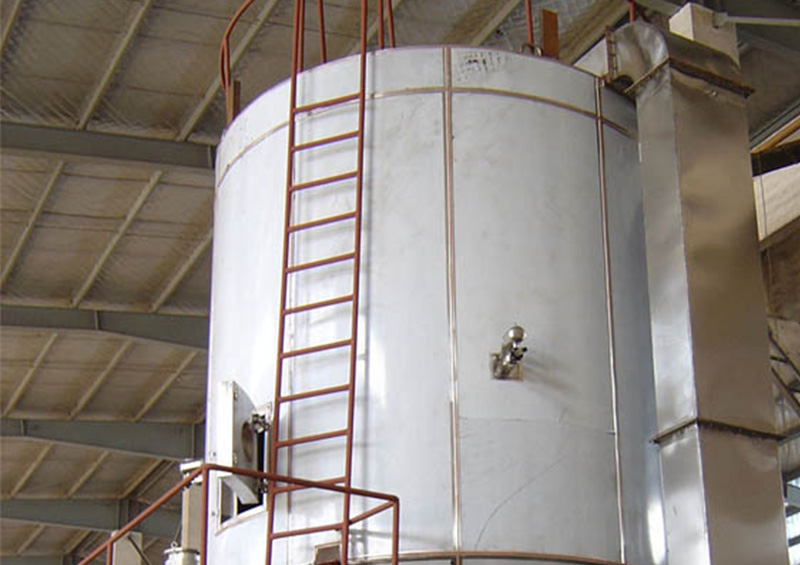
For low-temperature spray drying of sticky fruit powders, use a double-walled drying tower with cold-air jackets. The air cooling should maintain the chamber wall temperature below 50°C so that thermoplastic powders do not reach their melting point and stick to the wall. Tangential secondary air can also help cool the tower wall.
Special mechanical tools keep loose material moving freely down steep cone angles during long operations:
Air Sweep systems fit a rotating arm with high-pressure nozzles along the internal circumference of the tower.
Compressed air streams operating at 6–8 bar generate a fast air curtain to clean internal surfaces.
The system creates a downward air stream that directs material toward the bottom center of the tower.
Plant operators synchronize these air sweeps with the system PLC to adjust burst times during continuous runs.
Continuous mechanical sweeping prevents heavy buildup on internal surfaces without forcing process shutdowns. Removing wall deposits preserves high output rates and protects vegetable powder from burning. Cold secondary air streams cool the lower chamber cone effectively. Mechanical sweeps ensure loose powder moves down toward discharge valves smoothly.
Rapid Evaporation and Thermal Control
Fast moisture removal protects delicate food components during commercial production. Heat-sensitive nutrients quickly degrade under long thermal exposure. Liquid droplets change into dry particles inside the spray dryer within a short time window. Ultra-short contact times shield active nutrients from heat damage while removing water quickly.
Process Parameter | Operational Impact on Processing |
|---|---|
Residence Time | Co-current spray drying keeps droplets in the hot zone for only 1–5 seconds, protecting Vitamin C. |
Dehumidified Inlet Air | Lowering inlet air humidity boosts moisture evaporation rate and speeds up the drying cycle. |
Powder Flowability | Dehumidified air prevents moisture absorption, keeping fine powder free-flowing in hoppers. |
Particle Recovery | Optimized cyclone shapes with specialized wrap-around inlets achieve a separation efficiency near 95%. |
Low-temperature moisture removal allows you to preserve fragile nutrients and natural color profiles. Dehumidified cold air evaporates liquid fast without requiring high inlet temperatures. This controlled process yields a nutritional vitamin rich product with low water activity. Controlling air temperature boosts overall drying efficiency across long factory schedules. Clean internal walls help workers collect every bit of finished powder. Dehumidified air keeps dry powder loose inside storage hoppers. Proper air handling guarantees high powder recovery while keeping target powder consistent. Collecting dry powder promptly stops ambient humidity absorption before bulk powder packaging. Matching precise thermal controls with dehumidified air jackets guarantees stable output, minimal downtime, and uniform quality. Spraying raw juices at low temperatures produces free-flowing fruit powder every day.
Scaling Up Machine Sizes and Picking the Right Spray Dryer
Choosing Machine Sizes from 5 kg/hr to 1,000 kg/hr
You can grow your plant's work from small 5 kg/hr test machines to automated 1,000 kg/hr factory setups. Matching your machine size to the water you evaporate boosts factory work speed. A small machine cannot handle your liquid volume, while a big machine wastes power and drives up costs. Spray dryers use roughly 1.2 to 1.5 kg of steam per kg of water while holding 50% heat efficiency. Small test machines let you check new organic powder recipes safely. Big factory machines lower your single unit energy costs because high production spreads steam use over bigger powder batches.
For plant liquids, you limit solids to 15-20% since thick liquids clog pipes easily. Removing water before drying unlocks energy savings linked to machine size. Pre-drying saves power because sprayers use ten to twenty times more energy than evaporators to dry water. Raising liquid solids from 50% to 55% cut energy use by 16% while boosting output by 20%. Higher output spreads power costs over more dry powder. You make a healthy, colorful, shelf-safe product by keeping balanced liquid feeds. Proper machine sizing creates stable food powder during every shift.
Reaching Safe Moisture Levels and Food Safety Rules
Lowering water activity stops germ growth inside your final fruit powder. Quick drying drops water levels past critical points to keep delicate powder ingredients stable. Removing extra water makes shipping easy and extends shelf life without using cold fridges. Safe moisture levels stop water absorption, keeping loose powder flowing inside hoppers without clumping. You collect good fruit powder by carefully controlling inside air heat.
Clean machine designs protect your food production lines from dangerous germ contamination. You must pick tools that follow cGMP rules and Clean-In-Place (CIP) cleaning standards. Automated CIP systems wash inside chamber walls completely between work shifts. Special spray nozzles spread cleaning fluids all through the drying tower. These automatic washing steps protect your fine powder from cross-contamination while preserving high product quality.
You should check your spraying method, wall-cooling tools, and machine sizes before buying equipment. Investing in a clean, non-stick setup built for sugary plant liquids boosts long-term profits and shields overall product quality. Next, factory leaders ought to run small tests and measure required biopolymers.
Trial area | Parameters to test | Why it matters |
|---|---|---|
Conditions | Test inlet temperatures 105–200°C | Prevents fruit wall sticking |
Airflow | Evaluate co-current flow | Protects vegetable extracts |
Yield | Measure powder recovery | High-efficiency models achieve up to 92% powder recovery |
Smart liquid drying yields fine powder, dry powder, fruit powder, vegetable powder, target powder, food powder, safe powder, and smooth powder reliably.
FAQ
How do you stop sticky fruit powder from clinging to internal walls?
You cool the drying tower walls below 50°C with cold-air jackets. You also run compressed air sweeps at 6–8 bar. These systems push warm fruit powder down steep cone angles. You collect loose powder quickly and store clean powder safely.
What feed solids level creates top quality vegetable powder?
You should keep your feed solids between 25% and 40%. This fluid thickness stops nozzle clogs and forms uniform droplets. Proper liquid flow yields fine food powder with low moisture. Controlled liquid feeds yield stable target powder batches and loose powder containers.
Why is low-temperature spray drying crucial for heat-sensitive food product quality?
Quick water removal under 150°C inlet air protects heat-sensitive nutrients like Vitamin C. Short heating times shield active powder nutrients from thermal damage. This fast process yields a dry fruit powder with safe water activity at 0.20. You collect safe powder easily and store fresh powder.
Which atomizer design handles thick slurry feeds to make dry powder?
Centrifugal rotary atomizers work on pulpy liquid feeds up to 30,000 cP without clogging. Fast spinning wheels turn thick mixtures into fine drops. This process generates smooth vegetable powder effortlessly. Rotary action helps you collect uniform particle powder and pure powder output.
How do Clean-In-Place systems protect fine powder quality?
Automated Clean-In-Place systems wash chamber walls well between work shifts. Specialized spray nozzles spread cleaning fluids through the whole drying tower. Automatic washing steps shield your organic powder from germ contamination. You maintain high powder purity standards across all bulk powder batches.