






Top Spray Dryer Technologies for Pharma Applications
 Apr 08, 2026|
 View:686
Spray drying helps you change liquid solutions into powders. You can control the process very well. In pharmaceutical manufacturing, powders need the right particle size or moisture level. There are many types of spray dryers to pick from. Some are traditional spray dryers. Others are low-temperature models, aseptic units, or inert gas closed cycle systems. Each Pharmaceutical spray dryer is best for certain products. When you pick a dryer, think about your product’s sensitivity. Also think about sterility and what the process needs.
Key Takeaways
Spray drying changes liquid medicines into powders. This process lets you control how big the particles are and how much water they have. - Pick the right spray dryer for your product’s needs. Think about things like if it can handle heat or if it needs to stay sterile. - Low-temperature spray dryers keep sensitive medicines working well. They are good for vaccines and enzymes. - Aseptic spray dryers use closed systems to keep things sterile. This is very important for products you inject. - Knowing about atomization methods helps you pick the best spray dryer. This is important for your special pharmaceutical uses.
Types of Spray Dryers in Pharma
There are different kinds of spray dryers used in making medicines. Each one works in its own way to help with special product needs. Knowing about these spray dryers helps you pick the right one for your job.
Traditional Spray Dryers
Traditional spray dryers use hot air to dry liquid medicines into powders. You can change the size, shape, and wetness of the powder. This is good for making powders for inhalers and tablets.
These dryers can make amorphous solid dispersions, which help drugs dissolve better.
They are great for making lots of powder at once.
You can set the temperature and feed rate to get the powder you want.
Many companies use Quality by Design to keep the process steady.
Low-Temperature Spray Dryers
Low-temperature spray dryers use lower heat, sometimes only 35°C. This keeps heat-sensitive medicines like vaccines and enzymes safe.
These dryers keep more than 95% of the activity in these gentle medicines.
They stop water from getting back into the powder.
Powders stay good for a long time, even at room temperature.
You can use special things like leucine and trehalose to keep powders safe.
Aseptic Spray Dryers
Aseptic spray dryers help make sterile powders for shots and other sensitive products.
Note: Aseptic spray dryers use closed systems and nitrogen gas to keep out germs and oxygen.
Feature | Description |
|---|---|
GMP Compliance | You can follow strict Good Manufacturing Practice rules. |
Closed-Loop Systems | Nitrogen keeps the area clean and free of oxygen. |
Integrated Cleaning | You can clean the machine without breaking sterility. |
These dryers also use filters and regular cleaning to keep everything germ-free all the time.
Inert Gas Closed Cycle Dryers
Inert gas closed cycle dryers use nitrogen or other gases instead of air. This keeps oxygen away from the medicine.
You can dry medicines that do not like oxygen without worry.
The closed system stops dangerous mixes from forming with flammable solvents.
These dryers help you follow safety rules and protect the earth by making less waste.
When you look at the types of spray dryers, you see each one works in a special way. You should pick the dryer that fits your product’s needs, like if it is sensitive to heat, needs to be sterile, or can be hurt by oxygen. By learning about the types of spray dryers and how they work, you can make better choices for your medicine-making process.
Pharmaceutical Spray Dryer Atomization Methods
When you use a pharmaceutical spray dryer, you must pick the right atomization method. The atomizer breaks the liquid into tiny drops. This step decides how big and good your powder will be. There are different atomizers to choose from. Rotary and pressure nozzle atomizers are the most common.
Rotary Atomizer
A rotary atomizer spins very fast. The liquid hits a spinning wheel and turns into a mist. This method is good for making powders with many particle sizes. You can use this atomizer for sticky or thick liquids. Many pharmaceutical spray dryer systems use rotary atomizers for big batches. You can control the drying process well. Rotary atomizers handle changes in the liquid feed easily. If you need lots of powder, this atomizer can help you.
Pressure Nozzle Atomizer
A pressure nozzle atomizer pushes liquid through a small hole at high pressure. This makes tiny droplets. You can use this atomizer when you want powders with even particle sizes. Many pharmaceutical spray dryer units use pressure nozzle atomizers for products that need uniformity. This atomizer works best with liquids that are not thick.
Tip: If you want to see the main strengths and weaknesses of pressure nozzle atomizers, check the table below.
Advantages of Nozzle Atomizers | Limitations of Nozzle Atomizers |
|---|---|
Precise Control: Excellent control over droplet size and distribution, ideal for uniformity. | Clogging: Prone to clogging with high solids content. |
Versatility: Handles a wide range of feed viscosities, suitable for various industries. | Limited Capacity: May not be suitable for extremely high-volume operations. |
Energy Efficiency: Requires less energy compared to rotary atomizers. | High Pressure Requirements: Needs high pressure for fine atomization, leading to wear and tear. |
Simple Design: Lower maintenance costs and easier operation. | N/A |
Different atomizers give you different results. Rotary atomizers are good for big batches and thick feeds. Pressure nozzle atomizers make even powders but may clog with thick liquids. When you pick a pharmaceutical spray dryer, think about your product and which atomizer fits best. By learning about atomizers, you can make better powders for medicine.
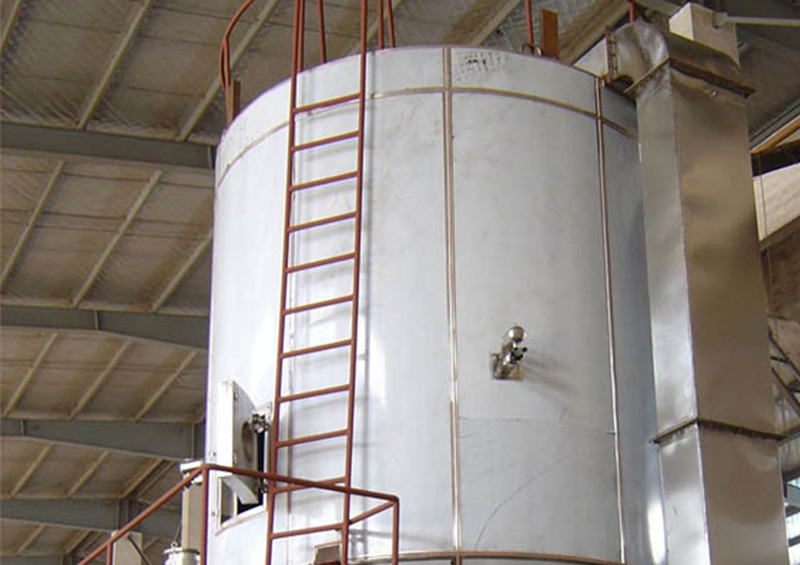
Spray Drying Process Overview
Process Steps in Pharma
Spray drying turns liquid medicine into powder. You can control how big and wet each particle is. First, you break the liquid into tiny drops. Then, these drops meet hot gas. The heat makes water leave fast. Dry particles form and move through the chamber. You use a cyclone and filter to separate the powder from the air. This keeps your powder clean and ready to use.
Here is a simple table that shows the main steps in the spray drying process for pharmaceutical products:
Step Number | Process Step |
|---|---|
1 | Atomization of the feed into a fine spray |
2 | Contact with hot gas for evaporation |
3 | Separation of dry particles using cyclone and filter |
Each step is important for making good powders. Spray drying helps you make powders with the right features for medicine.
Airflow Patterns
Airflow patterns are important in spray drying. How air moves inside the dryer changes your powder’s quality. There are two main patterns: co-current and counter-current.
Co-current airflow means hot air and droplets go the same way. This dries particles quickly and stops them from getting too hot.
Counter-current airflow sends hot air and droplets in opposite ways. This changes how big, wet, and dense the particles are. The nozzle direction in counter-current systems can change particle size. You can also see changes in density and moisture, which are important for product quality.
Tip: If you want powders with special moisture or density, try changing the airflow pattern in your spray drying process.
You can pick the best airflow pattern for your product. Spray drying lets you control how fast things dry and what your powder is like. By learning about these steps and patterns, you can make better powders for medicine.
Advantages and Limitations
Efficiency and Product Quality
Spray drying helps you make powders with the right size and moisture. You can control how the drying works. This means your medicine powder is always the same quality. Many companies use spray drying because it is fast. It can make a lot of powder at once.
But there are some problems. The process uses a lot of energy to heat the air. Sometimes powder sticks to the chamber walls and gets lost. If you use sticky or thick materials, it is harder to control the process. The machines cost a lot to buy. You also need skilled workers to run them.
Here is a table that shows some common problems with spray drying in making medicine:
Challenge Type | Description |
|---|---|
High Capital and Operational Costs | You must spend a lot on machines and pay for energy, maintenance, and skilled workers. |
Scale-Up Difficulties | Going from lab to big production can be tough. Different nozzle types and droplet sizes may cause issues. |
Product Loss | Some powder sticks to the equipment, so you get less product and pay more. |
Note: It can be hard to make many process steps work well together.
Handling Heat-Sensitive and Sterile Products
Spray drying helps you dry medicines that do not like heat. You can dry vaccines, enzymes, and big biomolecules without hurting them. This method is faster and cheaper than freeze-drying.
Special spray dryers keep products sterile. They use closed systems and clean gases to stop germs.
Many companies use spray drying to make sterile powders for shots and other sensitive medicines.
You can keep the medicine safe and stable during the whole process.
Spray drying lets you make powders that stay pure and active. You can trust this method for heat-sensitive and sterile products.
Applications in Pharma
APIs and Excipients
Spray drying microencapsulation can help make many medicines better. This method turns liquid active pharmaceutical ingredients (APIs) into powders that last longer. These powders are easy to use in tablets, capsules, or inhalers. Spray drying microencapsulation also protects drugs that are sensitive. This keeps them safe and helps them last longer.
Here are some ways spray drying microencapsulation helps with APIs and excipients:
Make fine powders from liquid APIs for easy mixing and measuring.
Cover sensitive ingredients so air and water do not hurt them.
Make powders for inhalers that are the right size for the lungs.
Help drugs dissolve better in the body by making amorphous solid dispersions.
Create medicines that let out their ingredients slowly over time.
Spray drying microencapsulation can also hide bad tastes in medicine. This makes it easier for people to take their medicine. The process is good for materials that do not like heat because it dries them fast without hurting them.
Vaccines and Antibiotics
Spray drying microencapsulation is important for making vaccines and antibiotics. This technology makes powders that stay strong and work well. You can store and move vaccines without needing to keep them cold. For mRNA vaccines, spray drying microencapsulation makes shipping and handling easier.
You can also use this method to:
Make antibiotics and vaccines last longer and work better in the body.
Make powders the right size for breathing treatments.
Fix problems with drugs that do not dissolve well or break down with heat.
Make solid dispersions that help the body take in medicine better.
Tip: Spray drying microencapsulation helps you make medicines that last longer and work well, even when things get tough.
Comparison of Spray Dryer Technologies
Key Differences Table
It is important to know how each spray dryer works. The table below shows the main ways these dryers are different. This helps you pick the best one for your needs.
Dryer Type | Best For | Key Features | Limitations |
|---|---|---|---|
Traditional Spray Dryer | General powders, large batches | Simple design, flexible particle size | Not for heat-sensitive products |
Low-Temperature Dryer | Heat-sensitive APIs, vaccines | Gentle drying, protects sensitive compounds | Lower throughput |
Aseptic Spray Dryer | Sterile powders, injectables | Closed system, sterility controls, CIP | Higher cost, complex operation |
Inert Gas Closed Cycle | Oxygen-sensitive, flammable | Uses nitrogen, prevents oxidation, safe | Needs special gas handling |
Tip: If your product does not like heat or oxygen, try low-temperature or inert gas dryers.
Selection Criteria
You need to match the spray dryer to your product and process. Here are some things to think about:
Production Scale: Use a lab dryer for small jobs. Pick a pressure or centrifugal dryer for big batches.
Material Characteristics: Choose a low-temperature dryer for heat-sensitive APIs. Thick liquids work well with a centrifugal dryer.
Powder Particle Size: For fine powders in inhalers, use an airflow spray dryer. For most jobs, a pressure spray dryer is good.
Energy and Maintenance: Think about how easy it is to clean, how much energy it uses, and your budget.
Containment and Emission: Make sure the dryer has dust collectors and good air flow. This keeps your product safe and follows safety rules.
Validation and Documentation: You must follow GMP rules. Keep full records and check that the machine works right.
You should also think about if your product is sensitive or needs to be sterile. If you need sterility, pick a dryer with clean-in-place and strong sterility controls. Always check that your dryer meets GMP and other rules. This keeps your process safe and your product high quality.
You can pick from different spray dryer types. Each type has special features. Look at the table below for a quick guide:
Type | Atomization Method | Key Feature |
|---|---|---|
Rotary Atomizer | Spinning disc | Works with many thicknesses |
Nozzle Atomizer | Pressure or two-fluid | Makes particles the right size |
Fluidized Spray Dryer | Fluidized bed | Great for products that don’t like heat |
When you choose a pharmaceutical spray dryer, check if it is easy to clean. Make sure it uses safe materials. See if you can reach parts for maintenance. Always check if the dryer fits your product’s needs. Make sure it follows important rules.
For the best results, ask experts for help. Plan ahead for growth and following rules.
FAQ
What is spray drying used for in pharma?
Spray drying changes liquid medicine into powder. This helps you make tablets, capsules, and inhalers. You can pick how big and wet the powder is.
How do you choose the right spray dryer?
You need to think about what your product needs. Check if it is hurt by heat, needs to be clean, or how much you want to make. If you are not sure, ask someone who knows a lot.
Can spray drying handle heat-sensitive drugs?
Yes, you can use low-temperature spray dryers. These dryers keep vaccines, enzymes, and other gentle medicines safe. Your medicine stays strong and works well.
What are the main types of spray dryers?
Traditional spray dryers
Low-temperature spray dryers
Aseptic spray dryers
Inert gas closed cycle dryers
You should pick the type that matches your product.