Instant coffee represents one of the most remarkable innovations in the food industry, transforming the complex flavors of roasted coffee beans into a convenient, soluble powder. This transformation is made possible by sophisticated manufacturing technology that has evolved significantly over decades. From large-scale industrial processing lines to specialized granulation equipment, instant coffee powder production machines demonstrate fascinating engineering ingenuity.
The Industrial Production Line: A Comprehensive System
Industrial-scale instant coffee production is not a single-step process but rather an integrated system of specialized machinery working in sequence. These comprehensive processing lines handle everything from raw coffee beans to packaged final products, with capacities ranging from modest 10 kg/hour setups to massive systems producing 800 kg/hour of final coffee powder .The production sequence begins with green coffee beans being delivered to raw material tanks via Roots fans after passing through vibrating screens for initial sorting. The beans are then weighed and enter baking furnaces where they become roasted coffee beans. After roasting, the beans are delivered to ripe material vessels through cooling plates with holes. Following breaking and weighing, the roasted beans are conveyed to extraction pots where the soluble compounds are carefully removed .The extraction liquid is then filtered, cooled, and conveyed to concentration systems. Double-effect concentrators remove water before the concentrated liquid is pumped to storage pots. At this stage, manufacturers may add assistant materials to create specific blends when the concentrated liquid enters the match material pot. After filtering, this prepared concentrated liquid mixture is pumped into the critical component—the spray dryer—for the final drying process .For manufacturers seeking to produce soluble granules rather than fine powder, fluidizing granulators provide the solution. This equipment transforms the powdered material into the small granules many consumers prefer for their dissolution properties and perceived quality difference .
Spray Drying vs. Freeze Drying: Two Primary Technologies
The drying process represents the most crucial stage in instant coffee production, with two main technologies dominating the industry: spray drying and freeze drying.Spray drying operates by transforming concentrated coffee extract into a mist of fine droplets that are exposed to hot air in a large chamber. As the droplets fall through the heated environment, moisture rapidly evaporates, leaving behind fine coffee particles. This method is highly efficient for large-scale production but exposes the coffee to high temperatures, which can affect flavor compounds. The resulting powder is typically fine and dusty, requiring additional processing to create the granules consumers recognize .Freeze drying (lyophilization) follows a completely different approach. The coffee extract is first frozen, and then placed under vacuum conditions where the frozen water sublimates directly from solid to gas without passing through a liquid phase. This method better preserves the delicate aromatic compounds and results in a higher-quality product that more closely resembles freshly brewed coffee in flavor. Freeze-dried coffee typically exhibits better dissolution properties and maintains more of the original coffee character, though at a higher production cost .Modern industrial lines often offer both technologies, allowing manufacturers to produce different product grades using the same fundamental equipment setup. The choice between methods involves balancing product quality objectives with production economics .
Advanced Granulation Technology: Improving Product Quality
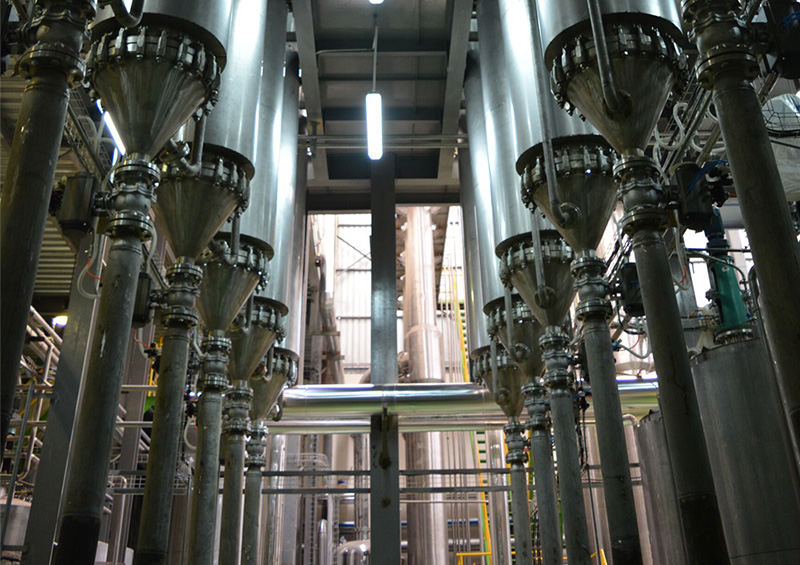
A significant innovation in instant coffee production addresses a common problem with spray-dried coffee—the natural tendency of fine powders to form dusty particles that don't dissolve optimally in water. Traditional spray drying often produces powders that float on the water's surface rather than dissolving smoothly .Modern agglomeration and granulation technology has solved this issue. Through a process called re-agglomeration, specialized equipment transforms the high-density fine powder into porous, hollow larger granules that allow water to quickly penetrate and achieve complete dissolution .One particularly advanced design incorporates a re-agglomeration granulation device that includes a drying tower, vibrating screening machine, high-pressure spray gun, steam input pipe, powder pipe, and conveying pipe with a first pipeline accelerator. This system feeds atomized droplets, steam, and powder into a cyclone cylinder where the materials rotate and collide. The steam moistens the surface of the powder particles, causing them to aggregate into larger granules .This technology significantly reduces the ultra-fine powder content in the final product. The granules gradually fall into the cyclone cone by gravity and enter the drying tower through the discharge port at the bottom. The system may also include a hemispherical baffle cover inside the drying tower positioned opposite the discharge port of the cyclone cone. This causes the powder falling into the baffle to be further fluidized by the airflow and the drying hot air in the tower, promoting additional aggregation between powders and further reducing ultra-fine powder content .
Aroma Preservation and Recovery Systems
Perhaps the most significant historical challenge in instant coffee production has been the loss of delicate aromatic compounds during processing, resulting in a product that lacks the complex fragrance of freshly brewed coffee. Modern equipment addresses this through sophisticated aroma recovery and recycling systems.Advanced coffee production lines now incorporate specialized aroma recovery units that capture volatile aromatic compounds during the initial stages of extraction and concentration. These systems typically include flash tanks, distillation columns, condensers, and rotating evaporators working in sequence .The process begins when the extraction liquid from the extraction tanks reaches a predetermined amount (typically 20-30% of the total extraction liquid mass). This portion, rich in aromatic compounds, is diverted to a flash tank for rapid evaporation. The vapors then proceed to a distillation column for further separation .The resulting aromatic gases pass through a series of condensers operating at different temperature ranges (4-10°C for the first condenser, 0-1°C for the second), ultimately producing a concentrated aromatic liquid. This liquid is later reintroduced to the coffee powder in a fluidized bed, where the aromatic mist is sprayed through specialized nozzles to evenly coat the coffee particles .This aroma recycling process can increase the aromatic compound content in the final instant coffee by 40% or more compared to traditional methods, significantly enhancing the sensory qualities of the product .
Energy Efficiency and Sustainability Features
Modern instant coffee production equipment increasingly incorporates energy-saving and sustainability features. Some systems capture heat generated during roasting to preheat incoming green coffee beans, reducing energy consumption .Other designs implement heat recovery systems that redirect thermal energy from one process stage to another. For instance, one patent describes a pre-heating fan that draws warm air from the main processing chamber to pre-warm coffee beans in the feeding mechanism before they enter the roasting area .Many industrial dryers can operate on various fuel sources, including natural gas, electricity, diesel, or even combustible waste materials such as extracted coffee grounds mixed with coal. This flexibility allows producers to optimize operating costs based on local energy prices and availability .
Conclusion: The Evolution of Coffee Technology
The technology behind instant coffee manufacturing has evolved from simple drying processes to sophisticated integrated systems that preserve the delicate characteristics of coffee while offering unparalleled convenience. Today's equipment addresses historical challenges like aroma loss and poor solubility through innovations such as aroma recovery cycles and advanced granulation techniques.






 Dec 02, 2025|
 View:1057