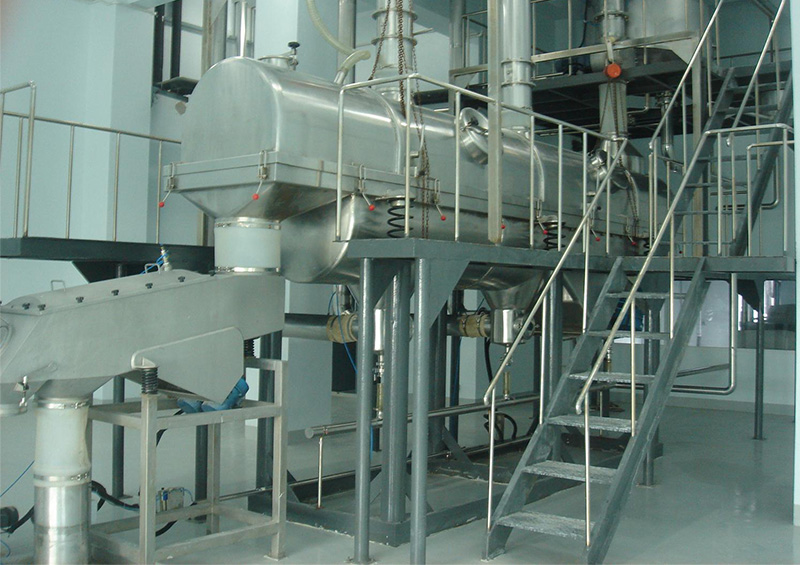






Camel Milk Powder Production Line in Kazakhstan: Complete Technical Overview
 Dec 08, 2025|
 View:1648
The camel milk powder production line represents a sophisticated industrial system designed to transform fresh camel milk into high-quality powdered products through a series of carefully controlled processes. This comprehensive production line integrates multiple technological systems to ensure product safety, quality consistency, and operational efficiency.
Production Process Overview
The complete camel milk powder production line follows a systematic sequence of operations:
1. Milk Reception and Storage
The process begins with raw camel milk collection and reception. Milk weighing tanks and receiving tanks made of SUS304 stainless steel are used to measure and store the incoming milk. These tanks feature CIP cleaning balls and are equipped with 40-mesh filter nets to remove impurities. The milk is then chilled to maintain freshness, with chilling tanks utilizing alveolate jackets and compressor systems to achieve optimal storage temperatures.
2. Standardization and Separation
Raw camel milk undergoes standardization to achieve consistent fat content. Dish separators with automatic residue discharge capabilities separate cream from milk, allowing for precise fat adjustment. This step is crucial as camel milk naturally contains varying fat levels (typically 2-5%), and standardization ensures uniform product quality.
3. Pasteurization and Homogenization
The standardized milk passes through plate pasteurizers or UHT sterilizers for heat treatment. Pasteurization typically occurs at 85°C for 25-35 minutes, while UHT sterilization reaches 137°C with a holding time of 4 seconds. This process eliminates harmful microorganisms while preserving nutritional properties. Homogenization follows, using high-pressure homogenizers operating at 40MPa to reduce fat globule size and improve product stability.
4. Concentration
Before drying, the milk undergoes concentration to remove approximately 30% of water content. Falling film evaporators or vacuum evaporation systems are employed, significantly reducing energy consumption during subsequent drying. This step also enhances the final powder's physical properties and reduces production costs.
5. Spray Drying
The concentrated milk is atomized into fine droplets in a spray dryer chamber, where it contacts hot air (typically 180-200°C inlet temperature). The rapid evaporation of water results in fine powder particles. Modern spray dryers feature precise temperature control systems with PID technology, maintaining outlet temperatures around 85°C to prevent protein denaturation while ensuring complete drying.
6. Powder Handling and Packaging
The dried powder undergoes sieving to remove agglomerates and achieve uniform particle size. Fluidized bed systems may be used for final drying and cooling. The powder is then packaged in automated filling machines using aseptic packaging materials, including foil bags, cans, or cartons, with nitrogen flushing to extend shelf life.

Key Equipment Components
Milk Processing Equipment:
Milk weighing tanks (100-5000L capacity)
Centrifugal pumps with 24M pump lift
Twin piping filters with 100-mesh stainless steel elements
Plate heat exchangers for preheating and cooling
Homogenizers (40MPa pressure capacity)
UHT sterilizers (tubular or plate type)
Spray Drying System:
Spray dryer with atomization system
Hot air generator
Cyclone separator
Fluidized bed for secondary drying
Powder cooling system
Auxiliary Systems:
CIP cleaning system with acid/alkali tanks
Steam supply system (3kg pressure)
Refrigeration systems
Air compressors
Water treatment units
Technical Specifications
Production Capacity: 500kg/h to 2000kg/h, with custom configurations available
Power Supply: 380V/50Hz, 3-phase
Material: SUS304 or SUS316L stainless steel throughout
Sterilization Temperature: 65-135°C adjustable
Homogenization Pressure: Up to 40MPa
Certifications: CE, ISO9001, MET, SA8000
Quality Control and Standards
The Camel milk powder production line incorporates multiple quality control points. Raw milk undergoes bacterial load testing (<100 CFU/mL coliforms) and acidity measurement (<16° Dornic). The final powder must meet specific standards: protein content ≥28% for Bactrian camel milk powder, fat content controlled between 5-28% depending on product type, and microbial limits of ≤50,000 CFU/g total plate count. HACCP systems are implemented throughout the process to ensure food safety.
Market Applications and Product Types
Camel milk powder serves diverse applications:
Infant Formula: Accounts for 65% of market applications due to hypoallergenic properties
Food & Beverages: Used in nutritional supplements, functional foods, and reconstituted milk
Cosmetics: Incorporated into skincare products for its moisturizing properties
Confectionery: Used in chocolate and candy production
Product types include full cream powder (58% market share), skimmed powder (32%), and flavored variants. The global camel milk powder market is projected to reach USD 27.1 billion by 2034, growing at a CAGR of 6.17% from 2025.
Operational Considerations
Energy Efficiency: Modern production lines incorporate heat recovery systems, reducing steam consumption by up to 30%. Spray drying optimization minimizes energy costs while maintaining product quality.
Hygiene Standards: The entire system operates under strict hygiene protocols with automated CIP cleaning, ensuring no cross-contamination between batches.
Flexibility: Production lines can be configured for various capacities (100L-300T/D) and product types, including yogurt, cheese, and ice cream production capabilities.
The camel milk powder production line represents a sophisticated integration of food processing technologies, combining traditional dairy processing principles with modern automation and quality control systems to deliver high-value camel milk products to global markets.